


By Yiep Joseph
The prosecution has formally responded to a defense application seeking to have the remaining statements of Dr. Riek Machar, the fifth accused, recorded in both audio and video.
Lead Prosecutor Ajo Ony’Ohissa submitted the prosecution’s written response on Monday during proceedings. Lead defense lawyer Kur Lual Kur confirmed receipt of the document.
The contents of the prosecution’s response were not disclosed during Monday’s session.
The defense has been given until August 12 to respond, after which the court will have submissions from both sides before determining how to proceed with the application.
The request for audio and video recording comes as Machar’s defence continues presenting its case in a trial that has attracted national and international attention because of the political standing of the accused and the circumstances surrounding the charges.
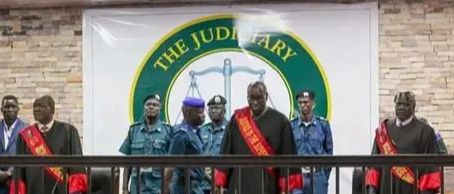
Machar, who remains under house arrest, is standing trial alongside seven co-accused before a special court in Juba.
The proceedings are linked to the deadly violence in Nasir, Upper Nile State, in March 2025. Prosecutors have accused Machar and his co-defendants of serious offenses, including murder, conspiracy, terrorism, treason, and crimes against humanity.
The defense has rejected the allegations and challenged aspects of the prosecution’s case and the court proceedings.
The trial began in Juba in September 2025 under tight security. It has since gone through a lengthy prosecution phase involving witnesses and documentary and digital evidence.
In April 2026, the prosecution concluded its case after calling its final witnesses. The defense then moved into the stage of presenting evidence and testimony from the accused.
The proceedings have also involved disputes over how evidence should be presented and how the trial should be conducted.
In June, the prosecution asked the court to allow the remaining accused to submit written defence statements rather than give lengthy oral testimony, arguing that the approach would help shorten the proceedings while preserving their right to present a defence.
The defense opposed that proposal, maintaining that the accused have a right to give oral testimony in a criminal proceeding.
The court later rejected the prosecution’s request, ruling that the remaining defendants should continue presenting their defense through oral testimony.
The latest application concerning audio and video recording therefore comes against the backdrop of an ongoing debate over the manner in which Machar and the other accused should present their evidence.
The issue also follows earlier disagreements over public access to the proceedings. In April, the defense asked the court to allow the South Sudan Broadcasting Corporation to broadcast the trial live.
The court rejected the request, saying it had already decided against live broadcasting.
For now, the focus is on the defense response due on August 12.
The next stage could therefore determine how Machar’s remaining statements are documented and preserved as the trial moves forward.