



The time has come for a new African Renaissance, one driven not only by political independence but also by economic empowerment, education, innovation, technology, ownership, and participation in the global marketplace.
For generations, African societies have often remained consumers of products, technologies, and financial systems developed elsewhere. Today, our challenge is to shift from being predominantly consumers to producers, investors, innovators, and owners of global economic assets.
Reforming Education for the Future
One of the foundations of this transformation must be a fundamental change in our school curricula. Education should prepare young Africans not merely to seek employment but to create enterprises, solve problems, develop technologies, and participate competitively in the global economy.
Schools should progressively introduce practical and innovative subjects, including digital technology and computer programming; artificial intelligence and emerging technologies; entrepreneurship and business management; financial literacy and investment education; agriculture and modern food-production technologies; engineering and manufacturing skills; renewable energy and environmental technologies; and research, creativity, and problem-solving.
Our children should learn from an early stage how economies work, how businesses are created, how capital is mobilised and how technology can transform communities.
Parents and communities should also consider how we prepare children financially. While toys and entertainment have their place in childhood, we should increasingly cultivate a culture of long-term investment and asset ownership.
Where legally and practically appropriate, families can teach children about savings, entrepreneurship, diversified investments, and ownership of productive assets. Rather than thinking only about what we can consume today, we should ask:
What can we own today that can create opportunities for our children tomorrow?
Participation in regulated global financial markets, including diversified investment in publicly traded companies through appropriate legal channels, can become part of financial education and long-term wealth-building. Such investments should be undertaken responsibly, with proper understanding of risk and professional guidance where necessary.
Africa possesses enormous human and natural resources, but resources alone do not guarantee economic power. Economic influence increasingly depends on capital, technology, knowledge, production capacity, and ownership.
The African private sector, governments, educational institutions, and communities should therefore work toward building companies capable of competing internationally.
We need African businesses that move beyond exporting raw materials and importing finished products. We should develop value chains that allow African countries to process, manufacture, innovate, and export.
Our young people should see themselves not only as employees of multinational corporations but also as future founders, engineers, investors, researchers, manufacturers, and global business leaders.
Geo-Economics and Africa’s Global Position
The modern international system is increasingly shaped by geo-economics—the interaction between economic power, technology, trade, investment, and international relations.
Africa therefore needs a long-term strategy for participating meaningfully in global economic networks.
This requires stronger regional markets, better infrastructure, transparent institutions, access to finance, technological advancement, and policies that encourage innovation and responsible investment.
African countries should also strengthen intra-African trade and develop partnerships with global markets on the basis of mutual economic benefit.
The transformation must begin at the grassroots.
We should prepare our children from square one—not waiting until they reach university or adulthood. A child who learns creativity, financial responsibility, technology, and entrepreneurship early in life enters adulthood with a different understanding of opportunity.
Our responsibility is not simply to leave our children land and natural resources. We should leave them knowledge, institutions, businesses, technologies, investment assets, and the confidence to compete globally.
Empowering the Black community and advancing an African Renaissance requires a change in mindset: from dependency to productivity, from consumption to investment, from importing knowledge to creating knowledge, and from being spectators in the global economy to becoming active participants and owners.
The question before us is not only what Africa has today, but what Africa will own, create, and control tomorrow.
Let us invest in our children, reform our education systems, embrace technology, build businesses, encourage responsible investment, and create a generation capable of competing in the global marketplace.
Our generation must lay the foundation. The next generation must build upon it.
About the author:
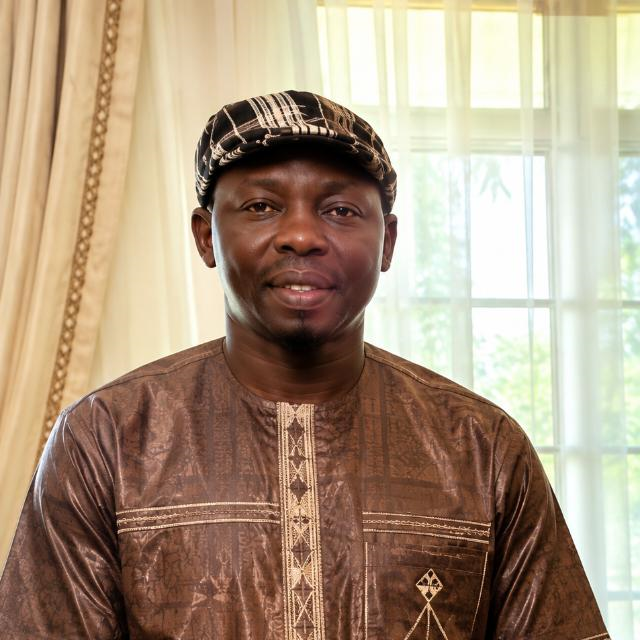
Hon. Mogga Charles Guya
Secretary for Foreign Affairs
South Sudan National Movement for Change (SSNMC), Juba