



Writer: Hou Akot Hou
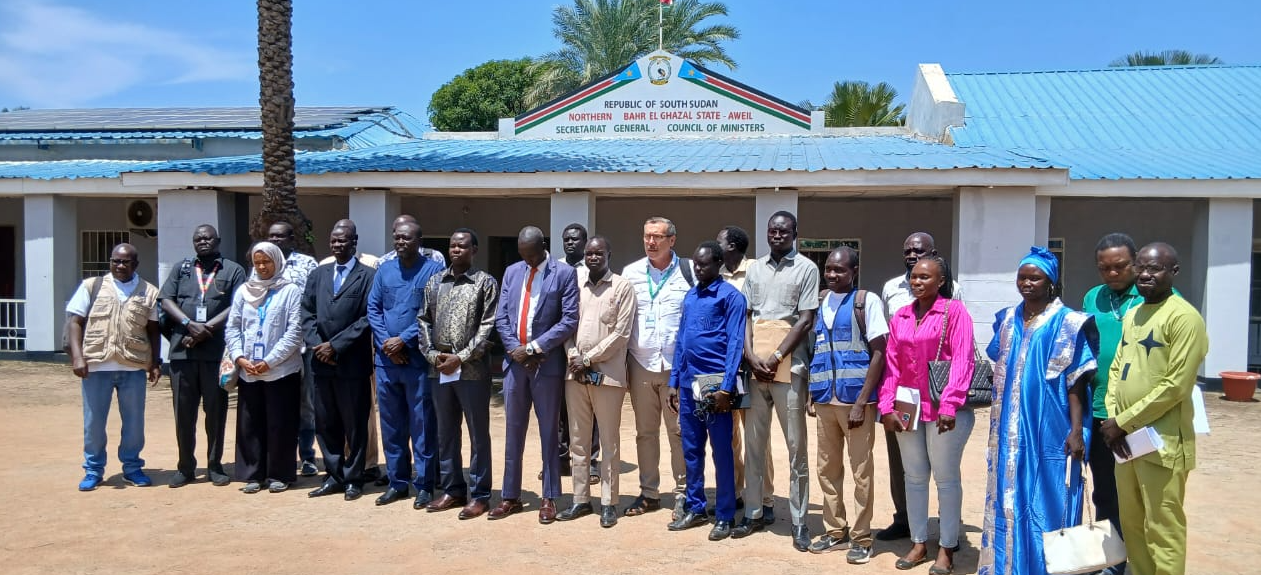
Government officials in Northern Bahr El Ghazal State, together with humanitarian and development partners including the United Nations World Food Programme (WFP) and World Vision, on Monday held a consultation meeting to review findings from a rapid assessment conducted in five counties to determine the impact of a prolonged dry spell.
Speaking to journalists after the meeting, the state minister for Agriculture and Forestry, Garang Chan Atak, said the consultation was prompted by the prolonged drought affecting all counties in the state, raising fears of food shortages later this year and into 2027.
Minister Atak described the situation facing households across Northern Bahr El Ghazal as critical and called on partners to work together to prevent the situation from worsening.
“During the dry spell in Northern Bahr El Ghazal State, we initiated the rapid assessment by calling the food security and livelihood partners. It was initiated by the Ministry of Agriculture, and for now we have compiled the report after it was presented to the Ministry of Agriculture, as the matter is critical,” he said.
Atak said an estimated 1.1 million people across the state have been affected by the prolonged dry spell.
He added that he would share the assessment report with the national Ministry of Humanitarian Affairs and Disaster Management and his counterparts to support efforts to address the growing threat of hunger in the state.
Meanwhile, State Minister of Information Gabriel Deng Yel, who represented Governor Charles Madut Akol at the meeting, said the consultation with international partners came at a critical time, as communities were unable to prepare adequately for the consequences of poor agricultural yields caused by the prolonged dry spell.
“The government, local NGOs, and international organisations sent their representatives following the Council of Ministers’ call to review the findings on the long dry spell affecting our crops and vegetables. We went through that document, and the NGOs and government should join hands,” Yel said.
Minister Yel said he would brief Governor Charles Madut Akol and national authorities, including the ministries responsible for agriculture and disaster management, so that appropriate measures could be taken to contain the situation.
He called on local and international partners to strengthen their support for affected communities through agricultural assistance and humanitarian interventions.
“We urge our local partners to put much effort into this matter because the situation is tough. 2027 will be worse, and some months of this year are not yet covered,” he cautioned.
Many parts of South Sudan have experienced inadequate rainfall this year, leaving farmers struggling to cultivate crops. Residents in affected communities say they need alternative livelihood support, including assistance with horticultural activities, which could enable households to grow vegetables for both consumption and income generation.