
The promise of modern infrastructure in Juba is undeniable. Roads, properly demarcated and aligned with the city’s master plan, are vital for commerce, mobility, and the long-term growth of South Sudan’s capital. Yet, the current urban development drive is unfolding with a troubling human cost: families are being stripped of[Read More…]
Editorial
In Juba and across South Sudan, video halls popularly known as Nadi have become a fixture of daily life. They are everywhere: in residential neighborhoods, market centers, and busy streets. For many families who cannot afford a television set, these halls provide an affordable alternative, offering football matches, movies, and[Read More…]
Child Errands and Parental Responsibility
In many residential areas, it is common to see young children being sent to nearby shops to buy small household items. Sometimes they are sent to purchase sugar, salt, flour, or other daily necessities. While this practice may appear harmless and even educational, it raises serious concerns when the children[Read More…]
Paying Salaries and Fighting Inflation Must Be the New Governor’s First Priority
The new governor of the Bank of South Sudan assumes office at a critical moment marked by rising market prices and growing economic hardship. The immediate priority must be clear: ensure the timely payment of salaries to civil servants and organized forces. Teachers, healthcare workers, police officers, and other public[Read More…]
The continued bloodshed across South Sudan is a painful reminder that peace remains elusive for millions of citizens. From local communal clashes to confrontations involving organized armed groups, the cycle of violence has cost countless lives, displaced families, and stalled national progress. The government must take urgent and decisive action[Read More…]
South Sudan government should provide support as well as imposing measures to ensure that the already announced free education become effective in schools. In the previous year, the initiative of free Education in private schools faced a lot of challenges as some were reported to be charging heavy fees. However,[Read More…]
Parties Should Display Political Toward Tumaini Peace Initiative
As the world look for solution to the conflict in South Sudan, Parties to the peace agreement should display political will toward dialogue. This will help toward ending violations to the peace agreement as well as gain trust from the region and the international community. From the signing of the[Read More…]
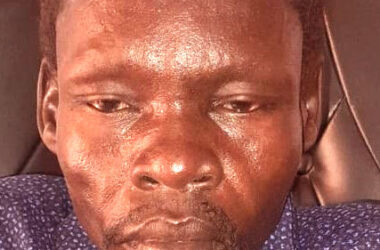
How can the Government be Government if we don’t Criticize it?
By: Ayuel Mangok Angui All the organizations responsible for the human leaderships are reckless to lead in a way that makes us become happy in a particular Society. The strong constitution builds for the organization to follow is very important, because it guides the organization to meet with the rules[Read More…]
From Lecture Halls to Battlefields: Rethinking Academia in South Sudan
Academia is meant to be a provocative venture of the mind; a space where ideas clash, curiosity is rewarded, and students are guided to think critically. Yet, too often, the reality in South Sudan’s universities falls far short of this ideal. Lecture halls, intended for learning, have become arenas where[Read More…]
Constituency Representation in Transition: South Sudan’s Accountability Challenge
In theory, Members of Parliament are the direct bridge between citizens and the state. They are expected to carry the voices of their constituencies into the national and state legislature and return home with policies that respond to local realities. But South Sudan’s Parliament is a body caught between two[Read More…]
Every school day, the journey to class exposes thousands of children to unnecessary danger on our roads. In the absence of school transport, many parents rely on commercial motorcycle riders, commonly known as boda-boda, to ferry their children to and from school. While this practice eases mobility, the way it[Read More…]
South Sudan’s Budget Delay: A Constitutional Stress Test
South Sudan’s Transitional Constitution is unambiguous: the fiscal year runs from July 1 to June 30 of the following year, and the nation must operate within an approved budget that has passed through all levels of review. Yet on February 3, 2026; barely four months before the fiscal year’s close,[Read More…]
South Sudan’s Budget Delay: A Constitutional Stress Test
South Sudan’s Transitional Constitution is unambiguous: the fiscal year runs from July 1 to June 30 of the following year, and the nation must operate within an approved budget that has passed through all levels of review. Yet on February 3, 2026; barely four months before the fiscal year’s close,[Read More…]
A Line That Must Not Be Crossed
South Sudan’s conflict has entered yet another dangerous phase; not through new battlefield offensives, but through a deliberate assault on humanitarian space. The reported order demanding that aid organizations surrender their vehicles in Jonglei is not a mere administrative abuse. It is a direct attack on civilians who depend on[Read More…]

Roads of Peace, Not Blood
It is deeply distressing to watch families continue to risk the lives of their loved ones on roads that have become synonymous with violence, ambushes, and fear. What should be ordinary journeys have turned into perilous undertakings, where survival is uncertain and grief is often the outcome. At the heart[Read More…]

Street Dogs and Silent Risks in Juba
In Juba and its surrounding suburbs, the sight of street dogs roaming freely has become a normalized part of daily life. They wander across busy intersections, loiter near market stalls, and curl up in residential compounds. For many, they are simply part of the urban landscape. But beneath this familiarity[Read More…]
As the calendar turns in Juba and towns across South Sudan, the air fills with a familiar cacophony. From iron sheets to jerrycans, anything that can produce sound becomes an instrument of celebration. It is a tradition rooted in joy, a communal expression of hope and resilience as people usher[Read More…]
Clarity Is the Antidote to Public Doubt
In South Sudan today, the debate over new traffic police directives has become a litmus test for the strength of institutions and the rule of law. Recent orders banning right‑hand‑drive vehicles, tinted windows, and mandating changes to sliding doors on public transport have ignited public outcry. Parliament has openly declared[Read More…]
The Future of R-ARCSS is in genuine dialogue
The adjournment of the Joint Stakeholders’ Dialogue from the 15th to the 19th, triggered by the absence of key representatives of the Revitalized Transitional Government of National Unity (R-TGoNU), is more than a scheduling setback. It is a glaring indictment of South Sudan’s fragile peace process. The non-attendance of the[Read More…]
The newly appointed Minister of Information, Communication Technology and Postal Services must make it an urgent priority to tackle the shockingly high cost of mobile calls and data in South Sudan. Recent figures reveal that South Sudan’s mobile data is among the most expensive in Africa with one gigabyte (1[Read More…]