



By Alan Clement
The South Sudan National Bureau of Standards is renewing efforts to boost staff capacity and laboratory systems to strengthen food safety regulation, after high-level talks with the Food and Agriculture Organization in Rome.
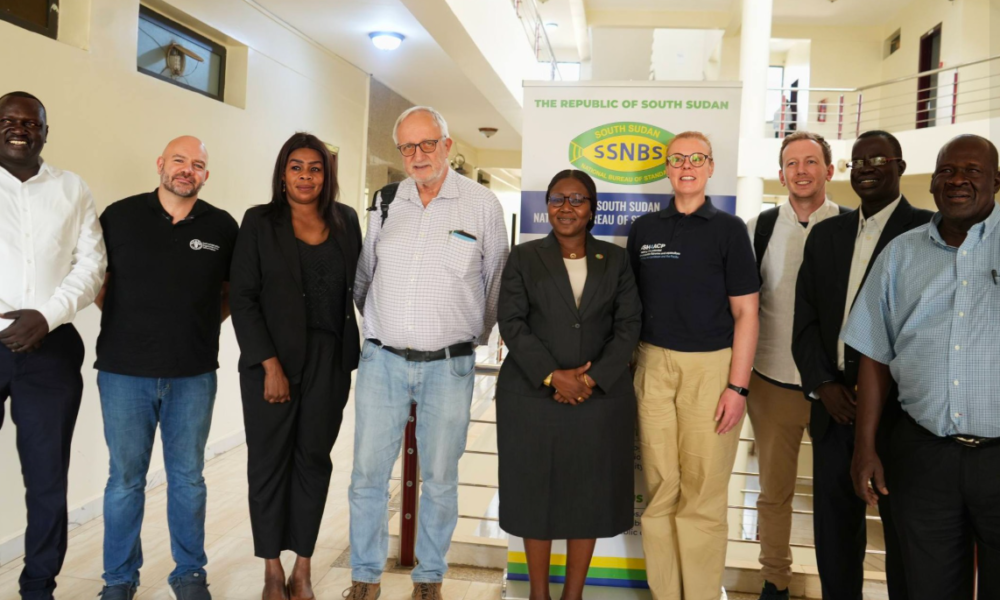
In a statement, the engagement on Wednesday, was led by the Executive Director of SSNBS, Gloria Nyoka Joseph focused on deepening technical cooperation in food safety, nutrition and the regulation of aquatic food products, particularly fish, which remains one of the most widely consumed foods in the country.
Gloria Nyoka Joseph stressed that the Bureau views capacity building and laboratory strengthening as critical pillars in protecting public health and restoring confidence in food products available on the market.
“Standards are not just documents; they must be supported by strong institutions, skilled personnel and functional laboratories,” she said in a statement.
“Our mandate as SSNBS is to develop and adopt standards, carry out conformity assessments, and protect public health by ensuring that products circulating in South Sudan meet national and international requirements,” she added.
Nyoka emphasized that collaboration with technical partners such as FAO is essential to closing existing gaps in testing, inspection and enforcement. “We are committed to working closely with FAO to strengthen food safety systems, improve livelihoods and ensure that consumers are protected,” SSNBS stated.
The Food and Agriculture Organization (FAO) delegation briefed the SSNBS leadership on potential areas of cooperation under the EU-funded New Aquatic Food Value Chains (NAVAC) Project, which aims to promote sustainable aquatic food systems and improve nutrition among vulnerable communities.
Although the NAVAC Project is geographically focused on Malakal, discussions in Juba underscored the need for national standards and stronger testing capacity to sustain food safety efforts.
Senior SSNBS officials present included Director General for Technical Operations, Ashjan Paulino, Director General for Planning, Research and Statistics, Kuol Ayom and the Director for the Laboratory and Testing Department.
Paulino stressed the Bureau’s technical role in safeguarding food safety through science-based assessments. “Effective regulation depends on reliable laboratory results,” she stated, adding that upgrading laboratories and staff skills would improve hazard detection, compliance verification, and risk response.
Director General Kuol Ayom underscored the importance of data and research in shaping standards and enforcement. He noted that evidence from testing and inspections informs national policy decisions, and closer collaboration with FAO would strengthen the Bureau’s planning and statistics functions.
The FAO delegation emphasized staff capacity building and technical assistance to improve laboratory operations and quality management systems. Delegates noted that strong national standards bodies are critical for ensuring food safety, supporting nutrition, and facilitating trade within South Sudan and across borders.
SSNBS officials pointed to the economic stakes of weak food safety systems, particularly for aquatic products. Fish remains a staple in household diets and a growing commodity in local and regional markets.
Ensuring its safety and quality, they said, is vital for public health, market access, and competitiveness.
Following the meeting, the FAO team toured the SSNBS Central Laboratory, reviewing current testing capacities, equipment, and ongoing quality assurance efforts. The visit allowed for practical exchanges on how laboratory services can better support aquatic food value chains, including contaminant testing and compliance verification.
Nyoka Joseph described the engagement as a milestone in structured technical cooperation. “By strengthening our laboratories and investing in our people, we are strengthening the entire food safety system of the country,” she said.
“This is essential for safeguarding consumers, supporting producers and enabling trade that meets required standards,” she added.
The meeting concluded with a shared commitment to continued engagement, with both FAO and SSNBS pledging to prioritize technical collaboration and capacity development in advancing food safety and standards enforcement nationwide.