


By Alan Clement
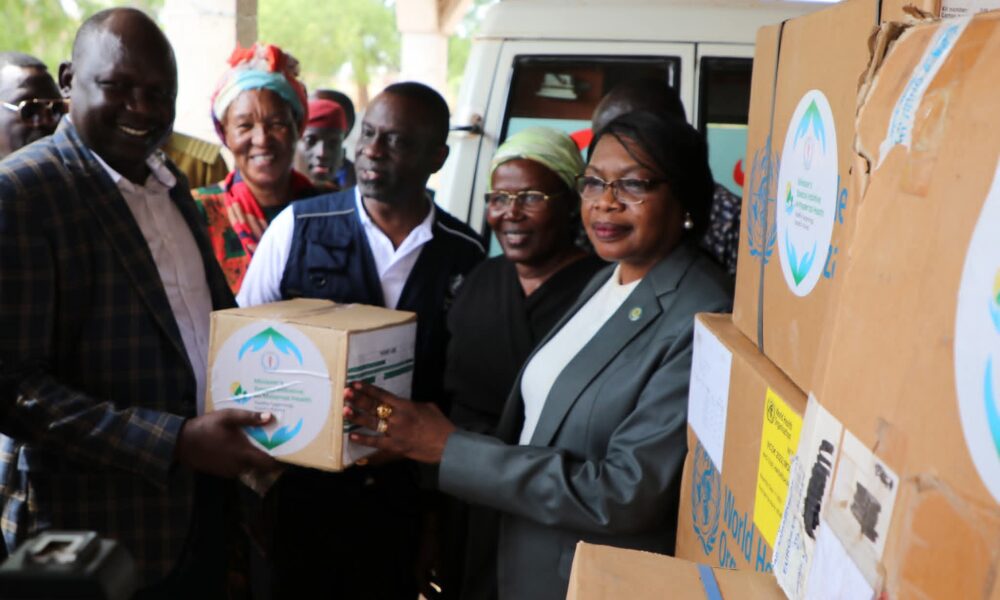
South Sudan stepped up efforts to curb preventable maternal and newborn deaths as the Ministry of Health and partners delivered life-saving supplies to Tali Primary Health Care Centre in Terekeka County.
The high-level delegation led by National Minister of Health, Sarah Cleto Rial, and included Dr. Humphrey Karamagi, Representative of the World Health Organization in South Sudan, alongside senior ministry officials, underscored ae renewed focus on strengthening frontline health services in hard-to-reach areas.
During the visit, the team delivered essential maternal and newborn health commodities expected to facilitate approximately 500 safe deliveries at the facility, reinforcing its capacity to manage routine births and obstetric emergencies.
The intervention is part of the Minister’s Special Initiative, launched at the 2025 Health Summit, to revitalize over 20 primary health care facilities in underserved counties. It aims to close gaps in staffing, medicines, equipment, and referral systems that hinder maternal and child health in rural areas.
During the visit, Minister Sarah Cleto Rial emphasized the government’s resolve to make maternal and newborn care accessible everywhere.
“Too many women still give birth without skilled assistance, and too many families lose mothers and babies from preventable causes. Through this initiative, we are bringing lifesaving services closer to communities long left behind,” she remarked.
South Sudan continues to face one of the highest maternal mortality ratios globally, with limited access to skilled birth attendance remaining a major driver of preventable deaths.
In remote counties such as Terekeka, long distances to functioning facilities, poor road infrastructure, shortages of trained midwives, and inconsistent drug supplies have forced many women to deliver at home.
At Tali PHCC, the new supplies including delivery kits, essential medicines, and equipment for managing obstetric complications will significantly strengthen the facility’s capacity to handle both routine and emergency cases.
Dr. Humphrey Karamagi reaffirmed WHO’s support for strengthening primary health care in rural South Sudan. “Every mother deserves a safe delivery, regardless of where she lives. Strengthening facilities like Tali is fundamental to reducing maternal and newborn mortality and building resilient health systems,” he noted.
The revitalization of Tali PHCC is part of a broader strategy aimed at decentralizing maternal and newborn services, ensuring that skilled birth attendance, antenatal care, postnatal follow-up, and essential newborn interventions are available at community level.
The approach is designed to reduce the “three delays” that commonly contribute to maternal deaths: delay in deciding to seek care, delay in reaching a facility, and delay in receiving adequate treatment.
For women in Tali and surrounding villages, the improvements could mean fewer risky journeys while in labor and greater confidence in the public health system.
The Ministry of Health has indicated that monitoring mechanisms will be strengthened to track outcomes under the Special Initiative, including facility delivery rates, maternal and neonatal survival indicators, and supply chain performance.
The long-term objective, officials say, is not only to reduce mortality but also to rebuild trust in government-run health services.
As South Sudan continues to grapple with limited resources and competing humanitarian pressures, the success of such initiatives will depend on sustained funding, consistent supervision, and retention of trained health workers in rural postings.
For now, the delivery of essential supplies to Tali PHCC represents a concrete step toward narrowing the survival gap between urban centers and remote communities; an effort that health authorities say is central to ensuring healthier beginnings and more hopeful futures for mothers and newborns across the country.