



By Kei Emmanuel Duku
Diplomatic tensions flared at the 20th Nile Basin Initiative (NBI) anniversary in Juba as Egypt’s top water official accused a single member state of paralyzing regional progress, effectively holding the collective interests of over 250 million people hostage to a self-centered political agenda. The high-stakes summit, intended to celebrate decades of structured cooperation, instead exposed a deep rift over the future of the Nile River Basin Commission and the legal framework designed to govern the world’s longest river.
The Egyptian Minister of Water Resources and Irrigation, Hani Sewilam, did not mince words, expressing deep regret that despite overwhelming support for a consultative path forward, a lone holdout has blocked the common goal of unity. “It is regrettable that one country blocked our common goal and held the process hostage for the sake of a self-centered political position rather than the collective interest of the Basin in cooperation, dialogue, and unity,” the Minister stated.
While addressing the delegates to mark the 20th celebration of the NBI, Sewilam expressed his country’s unwavering commitment to the initiative, emphasizing it as the only inclusive framework capable of uniting the ten Nile Basin nations, highlighting the critical nature of the Nile Basin Cooperative Framework Agreement (CFA) Commission’s consultative process created under the NBI.
“We firmly believe that the consultative process launched by the NILE-COM is the only viable pathway to move together to a new phase of cooperation in the CFA Commission.”
The minister further stressed that the states not currently party to the CFA represent a significant portion over half of the total Nile Basin population. He emphasized that their views, concerns, and interests must be fully taken into account so that any future arrangement reflects true basin-wide ownership and consensus.
Sewilam lauded the Special Committee’s progress report, noting its recognition of the CFA as a flexible instrument with provisions for amendment and evolution. He underscored the need for continued consultations under the Special Committee’s leadership to address outstanding concerns and facilitate the accession of remaining states to the agreement.
“The accession of more than 50 percent of the population in the Basin and Egypt advocating strongly and consistently to build on the positive momentum of the Special Committee’s report to speedily conclude the consultative process paving the way for an inclusive Nile Basin Commission,” the minister stated, highlighting the shared responsibility of all member states in achieving this goal.
Sewilam’s tone shifted as he confronted the alleged obstruction, stating, “It is regrettable that one country blocked our common goal and held the process hostage.” While reaffirming Egypt’s commitment to the consultative process, he called upon all Nile Basin countries to follow suit, noting that continued support from member states and development partners is essential for fostering trust and inclusivity.
He cautioned against taking any premature institutional steps toward the CFA Commission before a basin-wide consensus is reached, warning that no one should be left behind in the process. “So we cannot leave more than 50 percent of the Basin behind us,” he asserted, underscoring that Nile Day is more than a celebration of the river that unites the region; it is a celebration of shared identity and a collective spirit of inclusivity.
The minister issued a call to action, urging all member states, partners, civil society organizations, and academic institutions to work together to ensure that communities are heard, women are empowered, and youth are engaged. “Let us reaffirm our commitment to cooperation in the Nile. Let us celebrate our Nile family,” he said.
But in a forceful call for the democratization of the world’s most famous waterway, a high-ranking representative from the Kenyan Embassy in Juba declared that the era of secret diplomacy and expert-only water management must come to an end.
The Kenyan official argued that over 20 years of structured cooperation under the Nile Basin Initiative (NBI), the governance of the river can no longer be the sole reserve of governments and technical experts.
His address underscored the staggering scale of the Nile’s impact, describing it as a lifeline for more than a quarter of a billion people ranging from rural villages to bustling regional capitals, the river serves as the primary engine for agriculture, energy, and ecosystem survival.
“The Nile is more than a watercourse,” the representative noted. “For millennia, communities have drawn from its waters to cultivate crops, raise livestock, trade goods, and nurture families. Today, our responsibility as leaders is to ensure that the management of this shared resource is sustainable, equitable, and peaceful.”
While praising the NBI for two decades of building trust and technical data-sharing among member states, the Kenyan envoy warned that technical brilliance alone is no longer enough to save the basin from modern threats.
He pointed to a simple truth facing the region policies designed without local input often fail on the ground.
“Sustainable water governance must also be socially grounded,” the representative said. “Infrastructure built without local ownership may not endure. Agreements reached without inclusive consultation risk misunderstanding.”
The representative calls for a more inclusive and participatory model comes as the Nile Basin faces a perfect storm of challenges such as rapid population growth, accelerating urbanization, and chronic food insecurity are being compounded by the unpredictable effects of climate change.
The envoy further highlighted a grim hydrological reality where climate change is currently intensifying devastating floods in some countries of the basin and deepening catastrophic droughts within the member states.
“Environmental degradation threatens watersheds and wetlands that regulate our hydrological system,” the official warned, adding that coordinated adaptation is the only path forward.
Echoing the Nile day theme, “Voices of the Nile: Community, Youth and Women Engagement in Water Governance,” the Kenyan delegation described the initiative as a call to action to empower those who live on the river’s edge every day.
The representative argued that the most effective resilience measures such as watershed restoration and early warning systems are only successful when local actors, particularly women and youth, are given the authority to lead them.
“It is a call to listen more closely, the voices of the Nile Basin member states must be broadened” he stated.
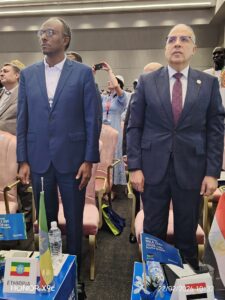
Despite the Egyptian minister’s pointed criticism, Calinie Mabrushimana, the outgoing chairperson of the Nile Basin Council of Ministers, highlighted the broader significance of the 20th anniversary of structured regional cooperation. She noted that this year’s theme, “Voices of the Nile, Community, Youth and Women Engagement in Water Governance,” is both timely and transformative. Mabrushimana emphasized that the governance of shared water resources must be inclusive and participatory, amplifying the voices of those who depend upon the waters every single day.
“The Nile is more than a watercourse. It’s a lifeline for over 250 million people across our Basin,” Mabrushimana stated, adding that the river sustains agriculture, generates energy, supports ecosystems, and anchors livelihoods. She stressed the profound responsibility of leaders to ensure that the management of this shared resource remains sustainable, equitable, and peaceful.
Mabrushimana acknowledged the mounting challenges facing the Basin, including rapid population growth, urbanization, food insecurity, and an increasing demand for water and energy.
“Climate change is intensifying floods in some areas and deepening droughts in others. Environmental degradation threatens watersheds and wetlands that regulate our hydrological system,” she warned, underscoring the reality that water governance must evolve and remain socially grounded to be effective.
Mabrushimana concluded by calling for a deeper commitment to inclusive and sustainable water governance. “May this 20th Regional Nile Day Celebration inspire a new commitment to inclusive, equitable, and sustainable water governance?” she asked the assembled delegates.
Member states commitment.
Dr. Harith Mustafa Abdurrahman, the Chairman of the Water Resources Technical Organ in Sudan, reaffirmed Khartoum’s unwavering commitment to the Nile Basin Initiative, emphasizing its role as the indispensable platform for addressing shared challenges.
He stated that this year’s theme resonates deeply with Sudanese communities, who firmly believe that sustainable and resilient water governance must be built upon a foundation of inclusivity. “Empowering our communities, our youth, and our women will ensure that the fruits of our cooperation are tangible, equitable, and owned by those who depend on the Nile every day,” Dr. Abdurrahman said, adding that “their voices are essential in building trust and shaping a future that works for everyone.”
Dr. Abdurrahman expressed his appreciation for the ongoing consultative process led by the Special Committee of the Nile Council of Ministers regarding the Cooperation Framework Agreement (CFA). He characterized the dialogue as a vital opportunity to build confidence and identify pathways forward where the concerns of every member state are addressed with respect and consideration. While striving to achieve cooperation on sustainable water management,
The official emphasized that inclusivity must guide institutional development and that the interests of all member states deserve equitable consideration. He reiterated Sudan’s commitment to unlocking the Nile’s immense development potential through coordinated investment, supporting projects that promote regional integration, enhance climate resilience, and deliver shared benefits. “Cooperation on the Nile is not merely an option but the only viable path to sustainable development, regional stability, and the prosperity of our people,” he noted, urging all parties to move forward with a unified spirit and demonstrate that the Nile will always remain a source of unity, cooperation, and life.
Meanwhile, Ethiopian Minister of Water and Energy Dr. Habtamu Itefa Geleta emphasized that the Nile belongs to all its people and that the equitable development of shared water resources is crucial for job security and alleviating the burdens disproportionately borne by women.
He highlighted the vital importance of the strategic development of water sources for clean water supply, irrigation, and hydropower generation. Describing one of the grant to Sudan as a “beacon of hope,” Dr. Geleta describes such initiative’s role in providing jobs, water, and clean energy.
The minister further showcased the Prime Minister’s Green Legacy Initiative, reporting that 48 billion trees have been planted to date. With 56 percent of these trees located within the Nile River basin, the initiative aims to eventually surpass a total of 90 billion trees.
“This shows our determination not only to utilize the resource at hand but also to safeguard the environment and enhance the quality of the water from the Nile,” Dr. Geleta stated, expressing hope that this commitment would be understood by all member states.
He stressed that cooperation is not an option but a necessity, essential to making the journey together as a Nile family under the motto, one river, one people, and one vision. He anchored Ethiopia’s service for cooperation on the principles of equitable and reasonable utilization, alongside the obligation to prevent causing significant harm.
However, Dr. Geleta called for the operationalization of the agreement on the colonial treaty and the expedition of the process to operationalize the Nile Development Commission, intended to lay out an institutional framework that will govern the shared vision of the Nile for all member states.
Dr. Alfred Okidi, Permanent Secretary for the Ministry of Water Resources and Environment in Uganda, emphasized that women and youth are indispensable to the development of Nile Basin water resources. He maintained that regional water and energy security can only be achieved through strengthened cooperation, sustainable institutions, and predictable financing. Affirming his nation’s stance, Dr. Okidi stated: “Uganda remains firmly committed to the cooperation, equitable and reasonable utilization, and strengthening of the regional institutions that support collective Basin management.”
The Permanent Secretary commended the Nile Basin countries for their efforts in strengthening basin-wide cooperation through the establishment of a formal legal framework in the form of the Nile Basin Cooperative Framework Agreement (CFA).
Dr. Okidi expressed his hope that, through sustained dialogue and mutual understanding, an agreeable pathway can be reached for all ten Basin Initiative Member States to transform into the Nile River Basin Commission. “History shows that cooperation and not conflict is the most common response to transboundary water management issues,” Dr. Okidi remarked, reiterating Uganda’s steadfast commitment to cooperation with other Nile Basin States and its active role in ongoing engagements to ensure an all-inclusive cooperative framework moving forward.
Similarly, Deputy Minister of Tanzania Kundo Mathew reaffirmed Tanzania’s shared commitment to the Nile Basin Initiative, emphasizing that the Nile is more than a river; it is the heartbeat of their origin.
He stated that Tanzania stands proudly among the founding members of the initiative and remains steadfast in advancing the principles of equitable and sustainable use of water resources for socio-economic transformation.
The Deputy Minister reminded delegates that the true strength of their cooperation rises not only within ministerial halls and technical frameworks but in the voices of their people.
“Communities along the Nile are custodians of its water. Youth are the innovators who will shape its future. Women are the stewards of households, livelihoods, and resilience,” he said.
Mathew recalled with pride that the Nile Basin Initiative was born in Dar es Salaam, Tanzania, in 1999, as a bold step toward a shared vision and regional cooperation. He recognized that governance remains complex when not all family members are in agreement and urged all Nile Basin countries to unite so that they do not perish under the weight of division. “We found the Nile flowing. We have the duty to leave the Nile flowing,” Mathew cautioned member states, emphasizing the generational responsibility to protect the waterway.
Water Diplomacy
James Mawich Makauch, the newly appointed chairman of the Nile Council of Ministers and South Sudan’s Minister of Water Resources and Irrigation, reaffirmed the Republic of South Sudan’s steadfast commitment to the White Compact as a means of accelerating water, sanitation, and hygiene initiatives.
He highlighted the successful completion and operationalization of hydro-meteorological stations across the country, alongside ongoing feasibility studies for power station projects, capacity-building programs, and the active participation of South Sudanese experts in regional knowledge-exchange initiatives.
The chairman however stated that South Sudan government remains committed to settling its outstanding subscription fees to the Nile Basin Initiative (NBI), underscoring a firm belief in the power of sustained dialogue.
Makauch issued a direct call to Egypt, Sudan, the Democratic Republic of the Congo, and Kenya—states that are currently non-signatories to the Cooperative Framework Agreement (CFA)—to join the pact, emphasizing that the document remains a flexible instrument. “The Nile Basin Republic and Member States recognize as equal its supporters in managing and developing the Basin resources for the benefit of the present and future generations to come,” Makauch declared.
Dr. Eng. Nestor Niyonzima, the new Executive Director of the NBI, emphasized that the platform for cooperation established 27 years ago in Dar es Salaam continues to aim for the promotion of sustainable socio-economic development, the advancement of equitable utilization of shared water resources, and the strengthening of peace and stability across the entire Basin.
He highlighted significant milestones achieved to date, including the strengthening of cooperation mechanisms, the advancement of programmatic initiatives, and a robust portfolio of water-related investments totaling approximately $6.5 billion.
Underscoring the importance of inclusive participation in the stewardship of these shared resources, Dr. Niyonzima stated that effective water governance must extend beyond mere institutional and technical processes to embrace local communities, empower women, and engage youth as active partners.
The Executive Director further emphasized South Sudan’s central position within the White Nile system, noting its role as a vital geographical link between the Eastern Nile and the Nile-Equatorial Lakes sub-basins.
He observed that the Nile plays a fundamental role in the social, cultural, and economic life of all Basin countries, with South Sudan’s unique geography serving as a natural bridge between upstream and downstream nations.
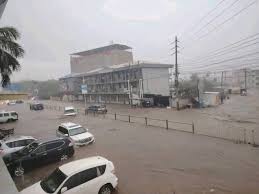
Dr. Niyonzima also addressed the significant challenges faced by South Sudanese communities due to severe and recurrent flooding, which he argued underscores the urgency of strengthened regional cooperation. He cited the tangible benefits South Sudan has already received through the NBI, including seasonal hydrological outlooks and advisories, technical support in monitoring water quality, capacity-building for young professionals, and essential policy guidance for the management of wetlands, specifically the Sudd Wetland, which remains one of the country’s most precious natural resources.
In the realm of water diplomacy, South Sudan’s Minister of Foreign Affairs and International Cooperation, Ambassador Monday Semaya Kumba, affirmed the government’s commitment to a policy of cooperation over conflict.
He emphasized the necessity of respecting the rights of all member states, the equitable sharing of Nile resources, and the pursuit of mutual benefits to ensure the long-term sustainability of the Basin’s resources.
The Ambassador stressed the importance of strengthening the bond between CFA-ratifying states while maintaining an open door for those yet to join the framework. The minister further clarified that South Sudan is fully cognizant of its contribution fee status within the Nile Basin framework and remains committed to fulfilling its financial obligations.
He reiterated the government’s pledge to work in close coordination with counterparts in other member states to ensure sustainable cooperation, equal benefit, and collective success within the regional framework.
While responding to some challenges facing water governance within the NB-countries, South Sudan’s Minister of Cabinet Affairs, Dr. Martin Elia Lumoro, issued a stirring challenge to the traditional “hydro-politics” of the Nile Basin. His message was simple yet provocative stop thinking like politicians and start thinking like neighbors.
The 20th Regional Nile Day, hosted in a region grappling with both historical neglect and modern climate pressures, became the backdrop for a call to prioritize human morality over diplomatic friction.
Dr. Lumoro’s address centered on the commonality of the people living along the world’s longest river. From the sprawling deltas of Egypt to the highland springs of Burundi, he argued that the struggle for dignity is universal.
“Just imagine the women, the youth, and the community in Egypt, and imagine the needs of the youth and the women and community in Burundi,” Dr. Lumoro told the delegation. “Are they any different? Their need for water is the same.”
He warned that political maneuvering has real-world casualties. “If you are sabotaging or prohibiting development of water resources in any of the countries, you are directly impacting negatively on the youth, on the women, and the communities on the Nile.”
To illustrate the urgent need for infrastructure investment, Dr. Lumoro shared a striking historical anecdote from South Sudan’s capital. While visiting a local electricity station, he discovered colonial-era records revealing that the British had designed Juba’s utility networks for a mere 100,000 people.
However, today, Juba is a bustling metropolitan hub with a population nearing one million, yet it still leans heavily on that original, aging infrastructure.
“The network is still the same,” he noted, using the city as a metaphor for the wider region’s struggle to catch up with the 21st century. “We all recognize that women and youth and communities are our focus when we talk about water, and that must derive your policy of cooperation.”
The Nile has long been a source of tension, particularly regarding the Cooperative Framework Agreement (CFA) a legal pact intended to ensure equitable water use that has faced years of diplomatic delays. Dr. Lumoro did not shy away from telling the truth to audience present.
“I’ve heard messages of challenges in signing of the CFA,” he admitted, “but I would like to call upon you: let morality drive you rather than politics” he told the ministers.
His plea for inclusivity and no voice left behind comes as South Sudan seeks to modernize water and electricity capacity. He specifically highlighted a recent $260 million announcement for power connectivity from Uganda to South Sudan as a model for regional success.
Closing his remarks, the Minister turned his gaze toward the international community, calling on the World Bank and the African Development Bank to recognize the reality of South Sudan’s needs emphasizing that the country requires massive support for environmental protection and resilience against the dual threats of flooding and drought.
“There is much work to be done for environmental protection and for resilience in South Sudan and this needs your support” he remarked
Speaking at a high-level celebration of the 20th Nile Day in Juba, South Sudan former Vice President for Service Cluster Josephine Lagu moved beyond the cold language of hydro-politics, arguing that for the millions living along the basin, water is not merely a commodity to be traded or dammed.
“Water is not just a resource,” Lagu told the delegates of regional ministers and partners in water management. “It is a livelihood, a heritage, and an identity.”
Her remarks centered on the theme of celebration “Voices of the Community in Water Governance: The Youth and Women.” For decades, negotiations over the Nile has not been inclusive, Lagu characterized the shift toward including women and young people as a corrective measure that was well overdue. “Women and youth must be put at the center,” Lagu stated,
She argued that those who are most vulnerable to water scarcity and climate change must have a primary seat at the table where the river’s future is decided.
The Nile Basin Initiative (NBI), established in 1999, has long struggled to reconcile the competing interests of its 11 member states most notably the ongoing friction between upstream nations seeking development and downstream nations.
Despite these headwinds, Lagu affirmed South Sudan’s unwavering support for the NBI. She described the organization as a vital mechanism that has, and will continue to, “strengthen cooperation among member states and enable them to resolve differences amicably.”
In a significant diplomatic push, she reiterated Juba’s support for the transition of the NBI into the Nile River Basin Commission, a permanent legal body that proponents say would formalize equitable water sharing.
The path forward remains complex. Several member states have yet to ratify the Cooperative Framework Agreement (CFA), the legal backbone of the proposed commission. Recognizing this deadlock, Lagu struck a conciliatory but firm tone.
She encouraged the “continuation of ongoing engagement with non-ratifying members,” urging all parties to address outstanding concerns within an “agreed framework and timeframe.”
“We are committed to developing long-term solutions in partnership with our development partners,” she stated signaling that South Sudan views the Nile not as a flashpoint for conflict, but as a platform for regional integration.