


By Chol D. Johnson
The government has called on young people to invest in organic food production as a sustainable alternative to reliance on oil revenues.
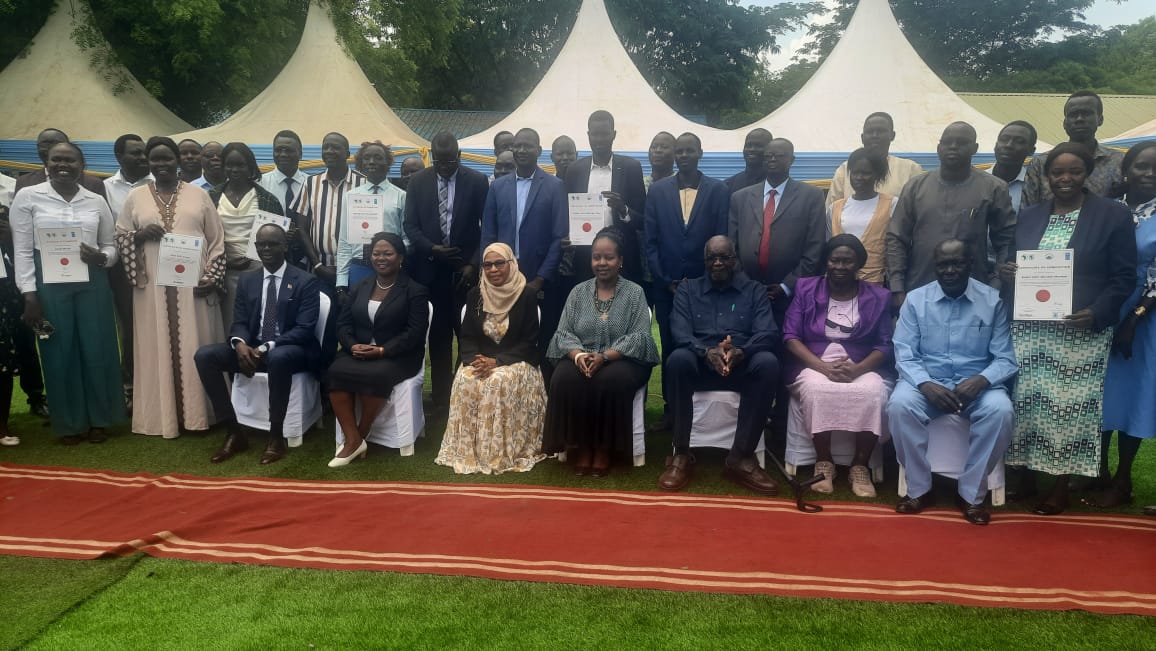
During the certificate awarding ceremony on Wednesday for government officials under the Youth Enterprise Development and Capacity Building (YEDCB) project in Juba, the national minister of youth and sports (though relieved on Wednesday evening from her position), Mary Nawai Martin, urged the country’s youth to tap into the nation’s agricultural potential.
“We have rich resources that we can depend on. Rather than relying on oil, let us make use of the organic food that we have in this country,” Nawai said.
She encouraged young people to refrain from engaging in conflict and instead contribute to national development through productive activities.
She also stressed the importance of creating a supportive environment to ensure that skills acquired through training translate into tangible economic benefits.
“If we do not create a conducive environment, our women and youth may receive training, but their efforts will not benefit the country,” she noted.
Nawai further expressed appreciation to development partners supporting youth empowerment initiatives, particularly the YEDCB program.
The remarks were made during the awarding of certificates to more than 230 government officials from various institutions who completed training in basic computer skills, project management, and leadership under the program’s capacity-building component.
The YEDCB project is implemented by the Ministry of Youth and Sports in partnership with the United Nations Development Programme (UNDP), the African Development Bank, and the African Development Fund.
Also speaking at the event, the deputy minister of finance and planning, Thok Turuk Thok, emphasised the critical role of young people in shaping the country’s future.
“The future of this country lies in the hands of its youth,” he said.
Turuk acknowledged the challenges many young people face after completing their education, particularly the lack of capital to start businesses. He commended development partners for supporting capacity-building initiatives and encouraged youth to pursue entrepreneurship rather than relying solely on government employment.
“Nothing gives me more joy than empowering the youth. I strongly support such initiatives,” he added.
He also highlighted the government’s role in creating policies and partnerships that can provide resources and opportunities for young people.
“Our youth are creative and resilience and expectations are high. Investing in them should be a top priority for South Sudan,” Turuk said, adding that the Ministry of Finance would continue to support youth empowerment programs.
Deputy UNDP Resident Representative Sheila Ngatia described the ceremony as a recognition of commitment to public service, professional growth, and institution-building.
“Today’s ceremony recognises dedication to strengthening public service and building institutions that can better serve the people of South Sudan,” she said.
Ngatia commended the government, particularly the Ministry of Youth and Sports, as well as the African Development Bank, for their support. She noted that the YEDCB project demonstrates the importance of partnerships in building sustainable programs and strengthening institutional capacity.
“This project has invested in strengthening institutions and human capacity across key ministries through ICT support and targeted training,” she said.
She congratulated the graduates and encouraged them to apply and share their skills within their respective institutions.