


By Sabri Dibaco
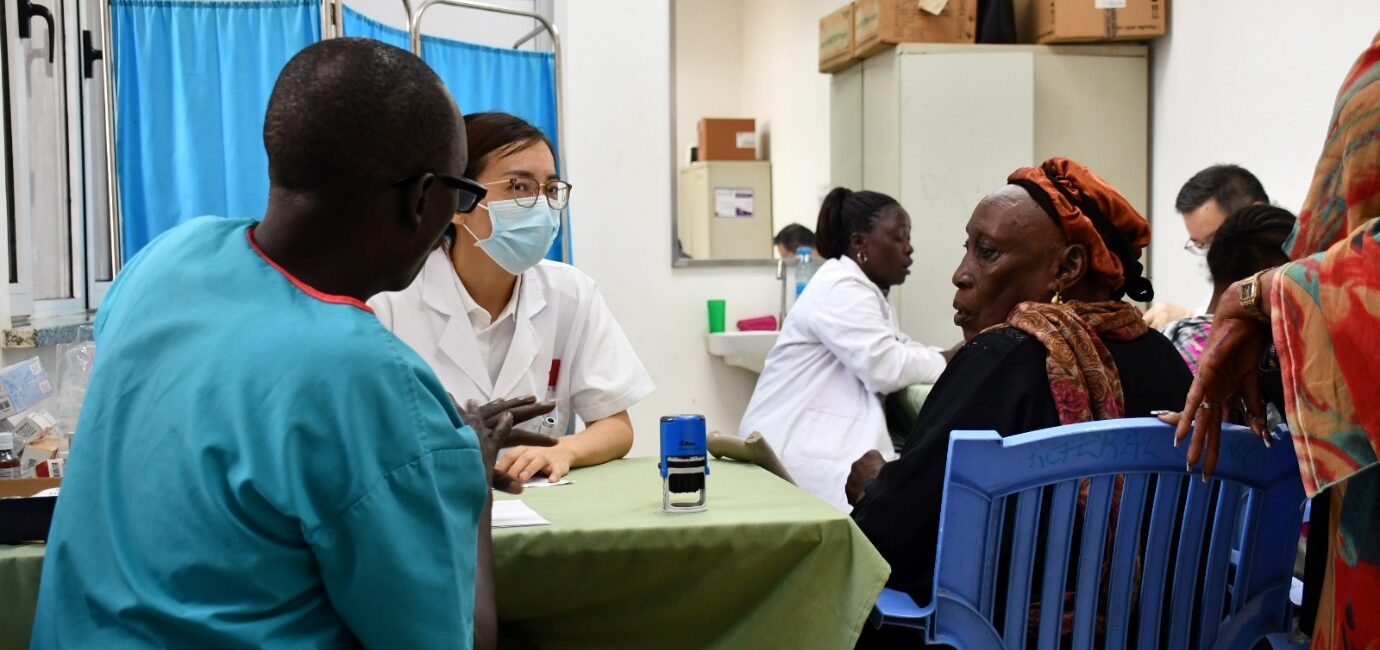
Juba Teaching Hospital has become a symbol of growing medical cooperation between China and South Sudan as the 13th batch of the Chinese medical team continues its mission to improve healthcare services in the country.
In an exclusive interview with No. 1 Citizen Daily English Newspaper at the hospital, translator Li Jinkuan said the Chinese Medical Team has been serving in South Sudan continuously for nearly 13 years, with one batch replacing another every year.
“Over the past 13 years, we have treated more than 90,000 patients and carried out over 2,000 operations,” Li said.
He stated that the current 13th batch has been working in South Sudan for more than eight months and consists of specialists across nearly all major hospital departments.
According to Li, the team includes general surgeons, specialists, orthopaedic doctors, infectious disease experts, gastroenterologists, dermatologists, gynaecologists, anaesthesiologists, laboratory technicians, and traditional Chinese medicine practitioners.
“Our doctors are not only here to provide medical services. We also provide technical support, professional guidance, and training for local doctors and interns,” he explained.
He highlighted the work of the team’s gynaecologist, who works closely with local staff on daily clinical duties, training sessions, and management of complicated medical cases.
“We work together, study together, and develop together; we are not just providing help; we are building long-term cooperation,” Li said.
The Chinese medical team also pointed to visible improvements at the hospital, including the near completion of Phase Two of the hospital expansion project, which they described as a symbol of friendship between China and South Sudan.
Li noted that the team has introduced new medical equipment and technologies while helping local staff build professional capacity through continuous training.
Among the senior members of the mission is a gynaecologist from the 30th Chinese Medical Team, who revealed she had first served in South Sudan three decades ago as part of the very first Chinese medical delegation.
“This is my second time here,” she said. “Every day we participate in morning meetings, cancer discussions, and assist local doctors in different gynaecological surgeries.”
She explained that the team is currently providing free cervical cancer screening services for women, including colposcopy, biopsy procedures, and treatment for cervical diseases.
The doctor also announced the arrival of a newly donated laparoscopic system from the Chinese government, which is expected to begin operations soon.
“We will provide practical and hands-on training for local doctors,” she said. “Minimally invasive surgery can reduce trauma, bleeding, infection, and improve women’s health outcomes.”
Quoting a popular proverb, she added: “Teaching people how to fish is better than simply giving them fish.”
Despite their achievements, the medical team acknowledged facing challenges, particularly language and cultural barriers, especially for doctors serving abroad for the first time. However, team members say they are making efforts to improve their communication skills and adapt to the local environment.
In a message to the people of South Sudan, Li expressed hope for lasting peace and prosperity.
“We hope the people of South Sudan will have a better future, and we hope the friendship between China and South Sudan will last forever,” he said.
One patient by the name Afia Mariam expressed happiness, thanking the Chinese for the support they are offering, most especially to the women and children in Juba
“I just want to thank the Chinese people because nowadays the medical care has improved better than it was before,” said Mariam
Mariam called on the government to continue the partnership with the Chinese and also learn from them, citing that training for our local people should be the top priority for the government because one day the Chinese will go back to their country.
Let our government send people to China so that they can go and learn and come back and promote the health system in the country.
China has been one of the biggest donors to South Sudan’s healthcare facilities for so many years now.