

By Chol D. Johnson
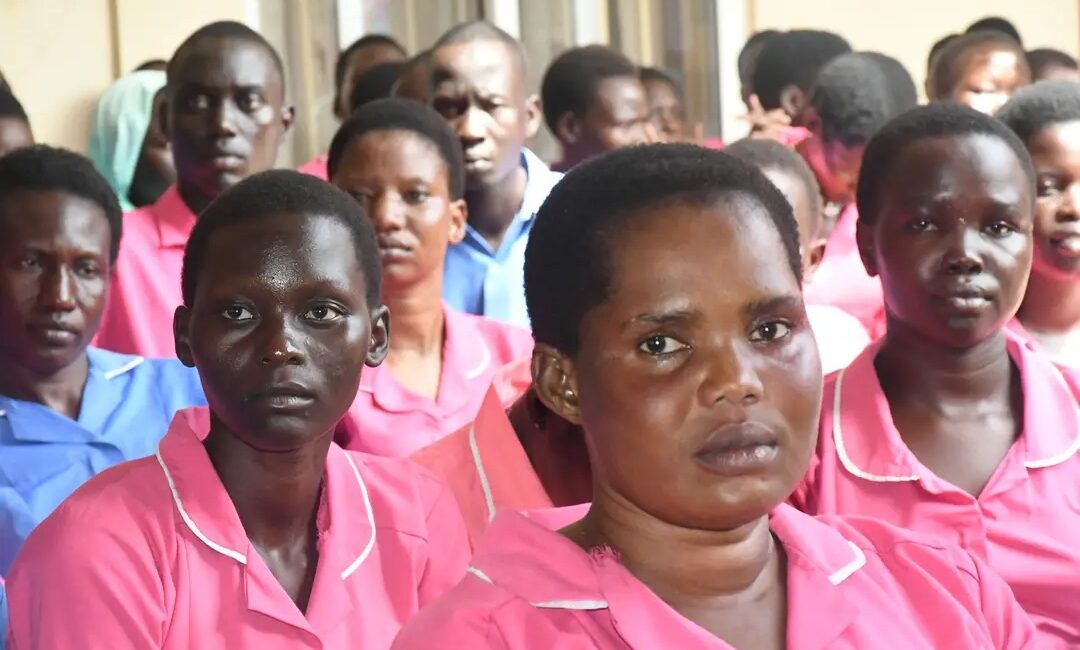
The South Sudan Nurses and Midwives Association (SSNAMA) has called on the government to increase investment in midwifery education and the broader maternal healthcare workforce.
In a press statement issued on Tuesday, SSNAMA President Repent Khamis George urged the government to prioritise investment in the recruitment, education, and retention of midwives.
“On this important day, the South Sudan Nurses and Midwives Association calls upon the Government of South Sudan to prioritise investment in midwifery education, recruitment, and retention,” Khamis stated.
His remarks come as SSNAMA joins the global community in commemorating the May 5, 2026, International Day of the Midwife, celebrated under the theme “One Million More Midwives.”
Khamis noted that the day serves as a call to action to strengthen a critical lifeline for mothers and newborns in South Sudan.
“This powerful call to action highlights the urgent global need to scale up the midwifery workforce, and it speaks directly to the realities and priorities of South Sudan,” he explained.
He pointed out that in a country where maternal and newborn health indicators remain among the most challenging in the world, midwives play a lifesaving role.
Across towns, villages, and hard-to-reach communities, they provide essential care before, during, and after childbirth.
Often, they are the first and sometimes the only skilled health professionals available to women and families.
“The call for ‘One Million More Midwives’ is especially relevant for South Sudan, where our health system continues to face workforce shortages, limited training opportunities, and gaps in equitable deployment,” Khamis emphasised.
He added that increasing the number of well-trained, supported, and retained midwives is one of the most effective ways to reduce preventable maternal and newborn deaths and build a stronger, more resilient healthcare system.
Khamis also appealed to partners and donors to support sustainable programs aimed at expanding and strengthening the midwifery workforce.
He urged community and political leaders to recognise and support the vital role of midwives in safeguarding maternal and newborn health.
“We must act now to train, employ, and support more midwives because every mother deserves skilled care and every newborn deserves a healthy start to life,” he underscored.
Khamis praised midwives across South Sudan for their courage, dedication, and service, which serve as the foundation of healthier families and stronger communities.
“Today, we celebrate you and reaffirm our commitment to stand with you. Together, let us answer the call for ‘One Million More Midwives’ for South Sudan, Africa, and the world,” he said.
Despite working under extraordinary circumstances with limited resources, Khamis noted that midwives remain committed to delivering safe, respectful, and compassionate care.
They act as educators, advocates, and trusted members of their communities, empowering women with knowledge and supporting families at every stage of life.
Adhieu Deng Elizabeth, a midwife at Bor Hospital in Jonglei State, highlighted transportation as a major obstacle hindering healthcare delivery.
“Midwives face a lack of transportation to reach remote areas for service delivery to newborn children, yet they remain dedicated to their profession,” she said.
She noted that despite delayed salaries, most of whom are women balancing household responsibilities, they continue to work hard to ensure the nation’s health and productivity.
“Despite the delay in salaries, our dedication to work is to serve the nation and let the newborn child be added to the South Sudan population,” Adhieu expressed.
John Deng Dau, a nurse and midwife in Twic East County, Jonglei State, echoed these sentiments, noting that the International Day of the Midwife is a significant milestone to remember in the history of the profession.
Deng highlighted that severe challenges occur during deliveries in remote areas, particularly at night when there is a lack of transport to access care.
“We face the challenge of transport during emergency calls at night to assist with deliveries in the remote areas,” he emphasised.
He further noted that many facilities continue to face shortages of essential medicines and equipment needed during childbirth.