

By Sabri Dibaco
Regional and international partners have reaffirmed their commitment to supporting South Sudan’s constitution-making process, describing it as a crucial step toward lasting peace, democratic governance, and national unity.
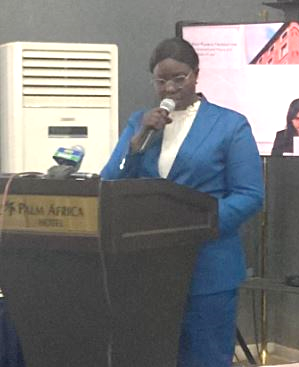
Speaking during the opening session of the two-day Civic Education and Public Consultation workshop, Victoria Anib Majur, IGAD Head of Mission and Head of the Social Development Unit, said the constitution-making process is not merely a legal exercise but a strategic opportunity to strengthen the social contract and build a stable and prosperous South Sudan.
“The Commission’s role is central in ensuring that the constitution-making process remains inclusive, credible, and firmly anchored in the aspirations of the people of South Sudan,” Anib Majur said.
Majur commended the NCRC for its leadership and thanked development partners, including the Government of Japan, the European Union, the Max Planck Foundation for International Peace and Rule of Law, and the Office of the IGAD Special Envoy to South Sudan, for supporting the process.
She stressed that IGAD’s engagement is guided by principles of inclusive governance, the rule of law, constitutionalism, and national ownership, adding that women, youth, and marginalised groups must be meaningfully represented.
Ambassador Major General (Rtd) George Aggrey Owino, interim chairperson of the Reconstituted Joint Monitoring and Evaluation Commission (RJMEC), said the permanent constitution is one of the key commitments under the revitalised agreement.
He praised the NCRC for the progress achieved despite challenges and said the country was approaching a defining constitutional moment.
“South Sudan is at a constitutional moment. We should not allow it to slip away,” Owino said.
He noted that civic education and public consultations have now reached all 10 states and the three administrative areas, marking the beginning of the final phase of consultations.
According to Awino, the next steps will include data analysis, report writing, and the drafting of the constitutional text.
He urged the transitional government, international partners, and friends of South Sudan to provide adequate financial support to enable the NCRC to complete its mandate on time.
Meanwhile, IGAD Special Envoy to South Sudan, Ambassador Mousa Djama Ali, emphasised that constitution-making is fundamentally a nation-building process that must be owned by the people.
“A constitution that belongs to the people is more likely to be respected, defended, and sustained by the people,” he said.
Ali said civic education and public participation are indispensable because citizens must understand the process, contribute their views, and see their aspirations reflected in the final document.
He called on South Sudanese leaders and citizens to put aside their differences and focus on the common challenges facing the country.
“The future of South Sudan will be built through dialogue, compromise, and reconciliation,” Ali said.
He reaffirmed IGAD’s commitment to supporting the NCRC and encouraged all parties to faithfully implement the agreement.
The workshop brought together representatives from government institutions, the judiciary, legal associations, academia, civil society organisations, development partners, and members of the media to discuss ways of strengthening public participation in the constitution-making process.
South Sudan’s permanent constitution-making process is being implemented under Chapter VI of the Revitalised Agreement on the Resolution of the Conflict in South Sudan (R-ARCSS).
The Constitution Making Process Act, 2022, established the National Constitutional Review Commission to lead civic education, public consultations, and the drafting of a permanent constitution.
Since the launch of the civic education and public consultation campaign in Juba in March 2025, the NCRC has conducted consultations across the country’s ten states and three administrative areas.
The current workshop is expected to help conclude the consultation phase and pave the way for drafting South Sudan’s first permanent constitution since independence in 2011.