

By James Innocent
Members of the Muslim community in Yei River County have appealed to local authorities to allocate land for a designated public cemetery, warning that the continued practice of burying deceased relatives within residential compounds is becoming unsustainable and poses challenges for urban development.
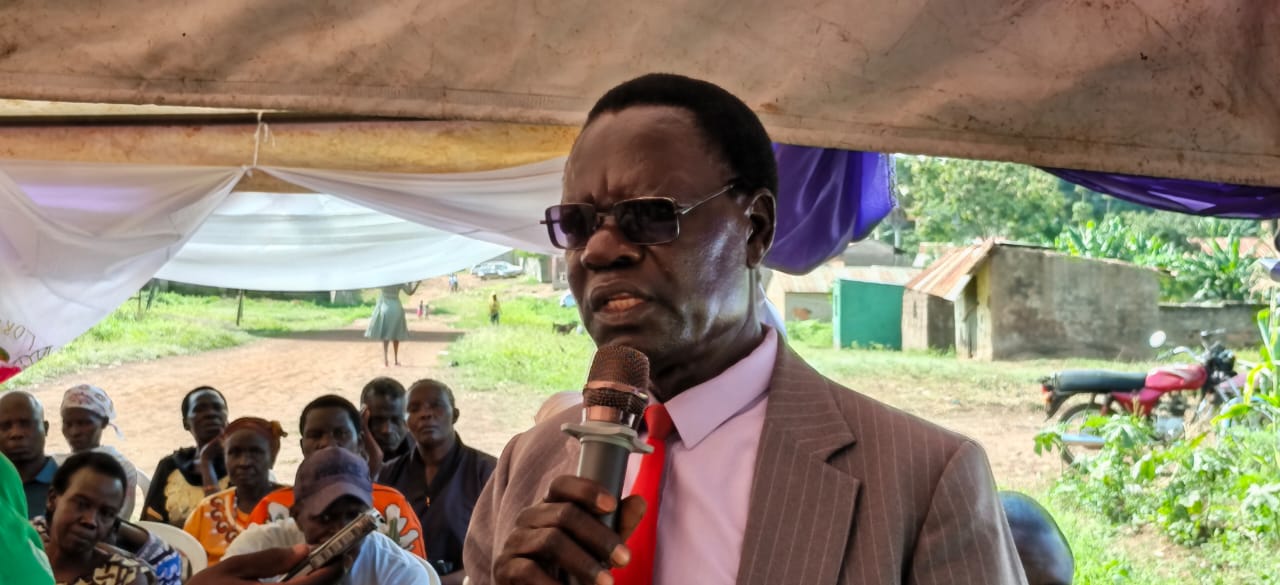
The appeal was made during funeral prayers for the late Mama Hawa Adams in Yei, where community representative Khemis Ade Nowa said the absence of an officially recognised Muslim cemetery has left many families with no option but to bury their loved ones on private property.
“We do not have a designated burial place for our community in Yei. Many families are forced to bury their loved ones within their homesteads because there is no public cemetery available,” Khemis said.
He noted that the increasing number of residential burials is gradually reducing land available for housing and future development, particularly as Yei’s population continues to grow.
According to community members, establishing a public cemetery would not only provide a dignified and organised burial space that respects Islamic religious traditions but would also contribute to improved land management and urban planning within the county.
Khemis called on the county government, traditional authorities, and relevant state institutions to work together in identifying and allocating suitable land that can serve the Muslim community for generations to come.
“Our request is not only about today’s needs but also about planning for the future. Every community deserves a proper place where its members can be laid to rest with dignity,” he added.
Public health experts have long emphasised the importance of properly planned burial grounds. The World Health Organisation (WHO) states that while dead bodies generally do not spread epidemics, poorly managed burial sites—particularly those located near water sources—can increase the risk of environmental contamination. The organisation recommends that cemeteries be carefully planned, properly documented, and maintained in accordance with public health standards.
Responding to the concerns, Yei River County Commissioner Samuel Henry Malimbo acknowledged that the county faces a shortage of officially demarcated burial grounds, saying the problem extends beyond the Muslim community.
“We have not adequately demarcated some areas for burial sites, and there are other communities facing similar challenges,” Malimbo said.
The commissioner stressed the need for greater public awareness on the importance of organised cemeteries and urged dialogue among Muslim and Christian leaders, traditional authorities, and government institutions to identify appropriate land for public burial grounds.
He further noted that well-managed cemeteries should be preserved for future generations, pointing out that in many countries, burial sites are protected as places of historical, cultural, and religious significance.
The Muslim community’s appeal has reignited broader discussions on land management, public health, and urban planning in Yei, where rapid population growth has increased pressure on available land and public infrastructure.
The issue also highlights the need for local governments to integrate cemetery planning into physical development plans to ensure orderly settlement expansion while accommodating the cultural and religious needs of diverse communities.
Although county authorities have indicated that consultations with stakeholders may be undertaken, no official decision has yet been announced regarding the allocation of land for a public Muslim cemetery.
As Yei continues to expand, community leaders hope that resolving the cemetery challenge will not only safeguard religious rights but also support sustainable urban development and public health in the county.