

By Sabri Dibaco
South Sudan’s population is projected to grow from 13.2 million in 2021 to nearly 20 million by 2030, driven by high fertility rates and the continued influx of refugees and returnees from neighbouring Sudan, officials revealed during the World Population Day High-Level Dialogue held in Juba.
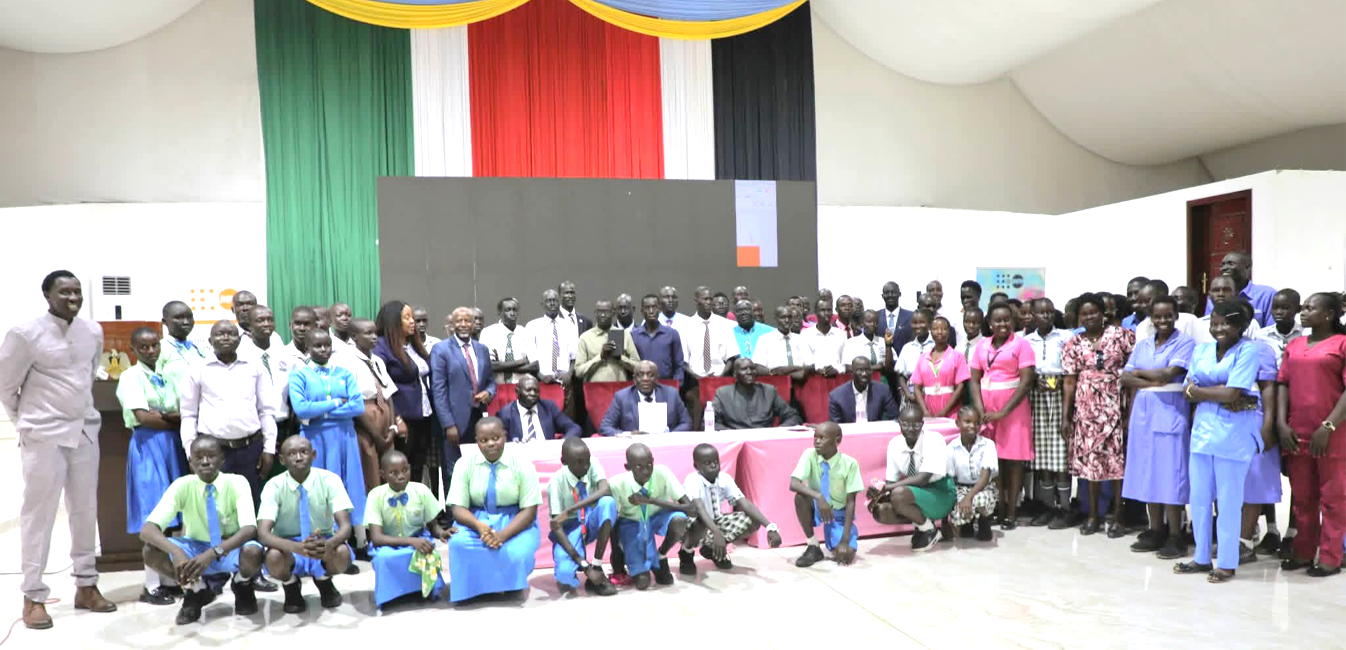
The event, organised by the Government of South Sudan in partnership with the United Nations Population Fund (UNFPA), brought together government officials, parliamentarians, UN agencies, and development partners under the theme “Harnessing Demographic Intelligence for the Realisation of the Hopes and Aspirations of Young People Today and for the Future.”
Presenting the country’s demographic outlook, Director General of the National Bureau of Statistics Augustino T. Mayai said South Sudan’s population is expected to reach approximately 16.36 million by the end of 2026 before rising to about 19.99 million by 2030.
According to the projections, ongoing conflict in neighbouring Sudan has significantly accelerated population growth through the arrival of refugees and returning South Sudanese.
The report estimates that migration could contribute an additional 2.2 million people to South Sudan’s population by 2030. Without this influx, the country’s population would be closer to 17.8 million by the end of the decade.
The findings also show that South Sudan continues to record one of the world’s highest fertility rates at 6.4 children per woman, with a crude birth rate of 40.9 births per 1,000 people. Around 35.7 per cent of women have an unmet need for family planning, while limited access to reproductive health services continues to contribute to rapid population growth and maternal health challenges.
Dr. Mayai said the figures should guide national planning rather than be viewed as mere statistics.
“These demographic realities are not abstract numbers. They represent classrooms that must be built, health services that must be expanded, skills that must be developed, and jobs that must be created,” Mayai said.
The dialogue also highlighted South Sudan’s youthful population, with 70.6 per cent of citizens under the age of 30 and nearly 59 per cent below the age of 18.
Officials warned that the country’s current dependency ratio of 119 dependents for every 100 working-age people places enormous pressure on education, healthcare, and employment systems.
However, development partners said the country’s youthful population could become a major driver of economic transformation if supported through long-term investments.
George Otoo, Head of Strategic Planning at the UN Resident Coordinator’s Office, presented demographic projections showing that investments in education, healthcare, voluntary family planning, skills development, and job creation could reduce the dependency ratio to 57 dependents per 100 working-age people by 2061.
He said such reforms could raise South Sudan’s GDP per capita to US$11,628 by 2061, transforming the country’s economic prospects.
“By making this simultaneous investment, we can drastically reduce our dependence ratio and propel our GDP per capita to US$11,628 by 2061,” Otoo said.
He added that the United Nations is working with the government to shift South Sudan from humanitarian assistance toward sustainable development by strengthening human capital and economic resilience.
Lawmakers also pledged to support policies that prioritise young people through legislation and national budgeting.
Simon Lumuri Philip, a member of the South Sudan Parliamentary Network on Population and Development, called for coordinated action across all sectors.
“We know that 70 per cent of the population is youth. All sectors should take the issue of youth as a priority to create responsible youth in our country,” he said.
Participants concluded the high-level dialogue by urging policymakers to use demographic data to guide national planning, warning that failure to invest in young people could turn South Sudan’s rapidly growing population into a socioeconomic burden instead of a demographic dividend.
South Sudan commemorates World Population Day each year with support from UNFPA and other United Nations agencies to promote evidence-based population policies and sustainable development.