




By Sabri Dibaco
A labour market assessment in Northern and Western Bahr el Ghazal has found that 65.7 per cent of respondents believe their skills do not match available job opportunities, while only 17.5 per cent of surveyed micro and small enterprises have ever received financing.
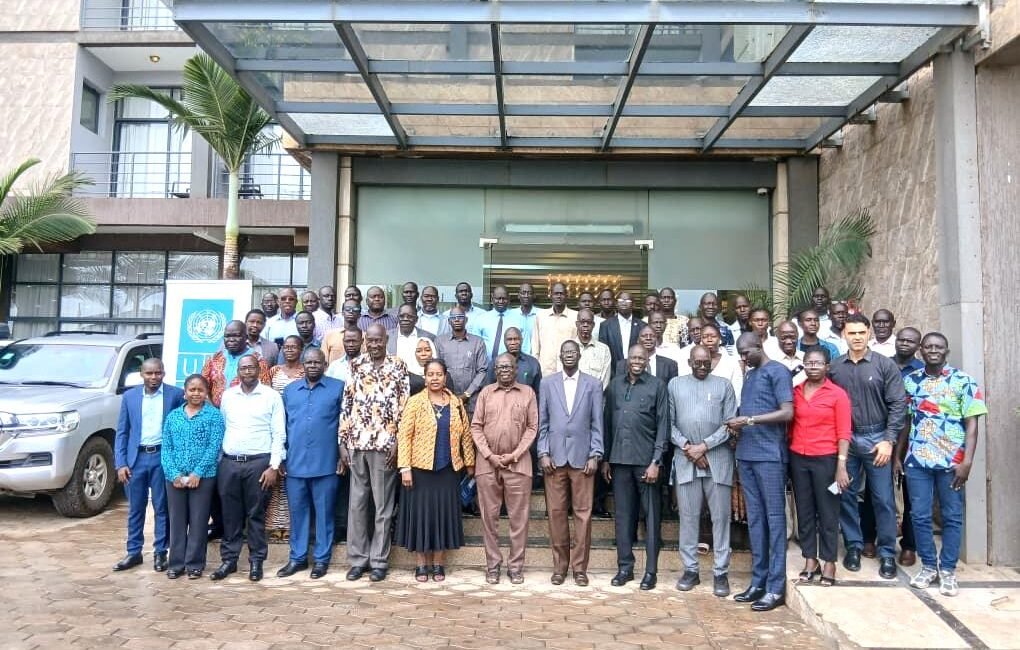
The findings, presented in Juba on Tuesday, October 27, 2026, highlight challenges facing young people and small businesses, including unemployment, limited vocational training, inadequate access to finance and difficulties reaching markets.
The assessment was conducted under the United Nations Development Programme’s (UNDP) Job Creation through Youth and Women-led Micro and Small Enterprises (JMSE) project, which seeks to improve employment opportunities and support enterprise development in the two states.
The study combined 1,674 quantitative interviews with 20 key informant interviews and 24 focus group discussions involving households, employers, businesses and other stakeholders.
According to the report, only 35.8 per cent of household respondents had worked during the seven days preceding the survey. The proportion stood at 46.5 per cent in Western Bahr el Ghazal and 27.5 per cent in Northern Bahr el Ghazal.
The assessment also found that 20.8 per cent of household respondents were unemployed and actively seeking work, while 3.8 per cent reported full-time employment.
Among those seeking jobs, 69.3 per cent cited a lack of employment opportunities, 67.1 per cent insufficient capital and 58.1 per cent inadequate skills as major obstacles.
Limited access to technical and vocational education and training (TVET) was another concern, with only 12.6 per cent of household respondents reporting participation in such programmes.
The report further revealed that 51.8 per cent of household respondents had no formal schooling, raising concerns about the accessibility of education and skills development opportunities for people seeking employment.
The assessment found that only 38.9 per cent of surveyed employers believed applicants possessed the skills required for available positions.
Among employers experiencing difficulties filling vacancies, 88.9 per cent cited insufficient skills as a major challenge.
Agriculture emerged as a priority sector, identified by 75.4 per cent of surveyed employers, alongside livestock production, agro-processing, construction, information and communication technology, and fisheries.
The report recommends aligning vocational training with labour market demands, expanding apprenticeships and providing practical experience to improve young people’s chances of securing employment.
It also found that 66.2 per cent of employers who recruited TVET graduates had to provide additional training, suggesting gaps between training programmes and workplace requirements.
Access to finance remains a major obstacle for small businesses, particularly those owned by women.
According to the assessment, only 9.1 per cent of surveyed women-owned enterprises had ever received financing, compared with 21.5 per cent of men-owned businesses.
Digital technology adoption was also lower among women-owned enterprises, at 6.8 per cent, compared with 28 per cent among male-owned businesses.
The report identified family responsibilities, gender expectations and early marriage among the barriers affecting women’s economic participation.
It further found that 73.7 per cent of surveyed micro and small enterprises were unregistered, while 46 per cent operated without employees beyond the owner. Despite these challenges, 80.3 per cent of the businesses expressed plans to expand.
Poor roads, high transportation costs and limited customer bases were also identified as barriers to business growth and access to markets.
The JMSE project, financed by the African Development Bank and implemented by UNDP in partnership with the Ministry of Trade and Industry, runs from 2025 to 2028 through government-owned business hubs in Aweil and Wau.
Its targets include training 1,060 young people and 830 women, establishing 378 new youth- and women-led enterprises, and supporting 100 existing businesses with growth potential. Women are expected to account for at least half of the participants.
Speaking at the Juba workshop, UNDP Deputy Resident Representative Sheila Ngatia emphasised the importance of aligning skills development with employers’ needs.
Stephen Doctor Matatia, Director General for External Trade at the Ministry of Trade and Industry, called for practical training and coordinated implementation to improve employment outcomes.
The assessment recommends expanding access to finance, strengthening market connections, improving vocational training facilities and investing in agriculture value chains and agro-processing.
It also identified overcrowding at training institutions, reporting 730 learners at Hai Darja in Wau against a stated capacity of 200 and 400 learners at Aweil Institute against a capacity of 70.
The report calls for improvements in training infrastructure, curricula, equipment, electricity and internet access.
It recommends that government institutions, training providers and development partners establish clear implementation plans and measure progress through job creation, business survival and improvements in participants’ incomes.
The findings underscore the need to ensure that vocational training and business support translate into sustainable employment and better livelihoods for young people and women in Northern and Western Bahr el Ghazal.