


By Kei Emmanuel Duku
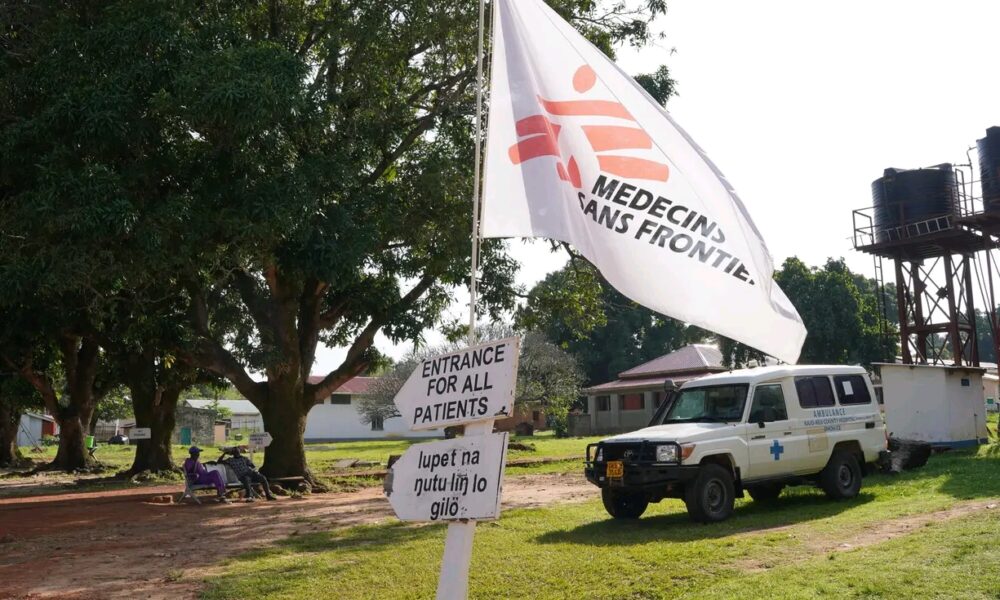
After three years of intensive medical intervention in a region once silenced by civil war, the international medical charity Médecins Sans Frontières (MSF) has announced it will hand over healthcare operations in Kajo-Keji County to the South Sudanese government.
The transition marks a pivotal milestone for Central Equatoria State, signaling a shift from emergency humanitarian relief to sustainable, state-led medical care. Since February 2023, MSF also known as Doctors Without Borders has worked alongside the Ministry of Health to resurrect a healthcare system that had been effectively leveled by years of severe conflict.
“Our goal has always been to restore dignity and life-saving care to a community that was forced to flee for its life,” said Ferdinand Atte, MSF Head of Mission in South Sudan. “As we prepare to hand over these services, we are leaving behind more than just buildings; we are leaving a trained workforce and the medical tools necessary for the Ministry of Health to lead the way into the future.”
The withdrawal is designed to be a gradual process to ensure that the local population does not face a sudden gap in life-saving care. The phased handover is scheduled to begin in June 2026, starting with the transfer of the hospital’s X-ray unit. By October, other essential operations will follow, with the entire process expected to conclude by December 2026.
As part of the exit strategy, MSF has committed to leaving all existing infrastructure, medical equipment, and relevant supplies to the Ministry of Health. Atte emphasized that the focus is now on capacity building, which includes hiring local staff, conducting specialized trainings, and putting logistical systems in place to ensure the hospital remains functional long after the international teams have departed.
The scale of the mission’s work since 2023 highlights the critical role MSF played in the county’s recovery. The organization provided more than 97,980 outpatient consultations and assisted in 2,077 births, providing a lifeline for mothers in a region where maternal healthcare was previously non-existent. Furthermore, the charity admitted 8,806 patients for inpatient care and treated nearly 28,000 cases of malaria.
Investment in human capital was also a priority. The MSF Academy programme trained 155 local nurses and midwives, while two South Sudanese doctors were sponsored to attend European universities for advanced surgical training. This ensures that the hospital’s departments—including maternity, neonatal care, pediatrics, and intensive care—will be managed by skilled professionals.
Beyond the hospital walls, MSF expanded its reach to 10 Primary Health Care Centers across the county. This support included the provision of medical supplies and the strengthening of a county-wide ambulance referral system. Recognizing the invisible scars of war, the teams also provided mental health services to those struggling with trauma, anxiety, and depression following the displacement of the last decade.
While MSF will now shift its focus toward urgent humanitarian needs in other volatile regions of South Sudan, the organization stated it will continue to monitor the situation in Kajo-Keji. Officials noted that they remain prepared to respond rapidly to any new emergencies that may arise in Central Equatoria State.
“The community has shown incredible resilience in returning home,” said one local medical officer. “This handover is a test of our own systems, but thanks to the foundation laid over the last three years, we are ready to take the lead.”
The Kajo-Keji Civil Hospital today stands as a fully operational hub for internal medicine and surgery, but its recent history was far grimmer.
Between 2016 and 2018, extreme violence forced the majority of Kajo-Keji’s population to flee into neighboring Uganda. During this period, the county’s infrastructure was systematically destroyed. The hospital was left a hollowed-out shell, severely damaged and looted of all equipment. For years, it remained non-functional, leaving returning residents with no access to even basic emergency medicine or maternal care.
Following the restoration project that began in early 2023, the hospital has been transformed into the primary provider of secondary healthcare in the county. It now features specialized units for neonatal care and emergency medicine, supported by a fleet of ambulances and a modern X-ray department.
The facility serves as the backbone of the local health system, supporting both the resident population and thousands of returnees rebuilding their lives.