



By Chol D. Johnson
The government of South Sudan has approved a national policy on the specialised labour court.
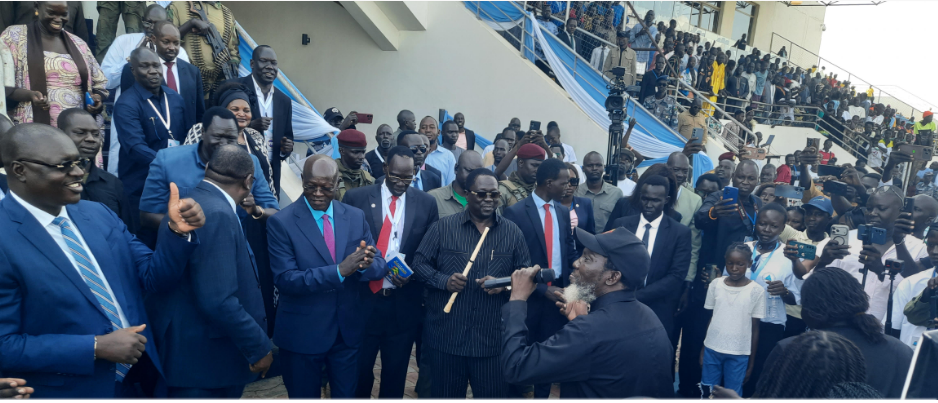
Speaking on Friday during the International Labour Day commemoration in Juba, Vice President Hussein Abdelbagi Akol and the chair of the Service Cluster stated that the policy ensures essential labour courts comply with international standards.
“This means that essential labour laws comply with international standards,” Akol said.
Akol expressed that the labour court will create an enabling environment where efficiency and accountability can thrive and where workers are protected and empowered.
“There is an urgent need to expand job creation opportunities, particularly for the youth in South Sudan,” he emphasised.
He added that the government of South Sudan recognises that sustainable economic growth cannot be achieved without investing in human capital.
“We must equip our youth with relevant skills, support them, and encourage their involvement in driving economic diversity,” Akol said.
“Our youth are our greatest asset, holding energetic and powerful potential that needs to be employed,” he added.
He noted that the government is committed to working with partners and the private sector to create sustainable employment.
Meanwhile, Joseph Ngere Pacikor, the TNLA speaker, said the TNLA Committee on Labour will hold a public hearing in parliament to ensure workers are treated fairly by their employers.
“I am declaring to you today that the TNLA Committee on Labour will hold a public hearing so that workers can send their representatives to attend. The parliamentary debate and procedures will ensure workers are treated fairly. If employers violate the labour laws, they will be summoned and fined,” Ngere stated.
Ngere added that labour laws must be applied in the workplace across government institutions, NGOs, and the private sector.
He noted that the South Sudan Workers’ Trade Union Act of 2014 specifies the obligation of the government, employers, and employees to remit five per cent of the salaries deducted from each worker into the union’s account.
The Minister of Labour, Anthony Lino Makana, said that the court will hear cases of unfair dismissal within 60 days and will enforce the Labour Act regarding wages, working hours, safety, and social security.
He added that the court will also protect women from workplace harassment and discrimination and provide legal aid to workers who cannot afford lawyers.
Makana underscored that the first-ever specialised labour judge will be appointed by the Chief Justice.
“Justice delayed for workers is justice denied for the nation. The era of delay is over,” Makana expressed.