


By Louis Loku
The leadership of Kumuri General Trading Company has called on South Sudanese to embrace commercial agriculture, saying it remains the most viable pathway to economic recovery, food security, and employment creation.
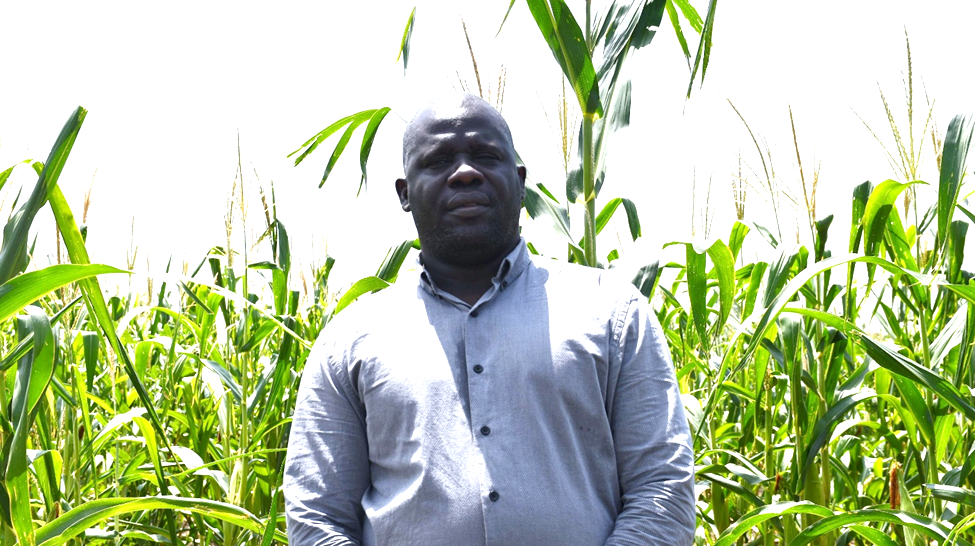
Speaking during a media tour of Kumuri Farm in Kapuri, Luri Payam of Juba County, Chief Executive Officer David John Kumuri said the initiative is aligned with President Salva Kiir Mayardit’s call for citizens to become productive and transform the country’s fertile land into economic wealth.
He said South Sudan should reduce its heavy reliance on imported food by investing in local production and expanding agricultural activities across the country.
“Our land is fertile, and we must transform it into resources. Agriculture can revive our economy through production and supply to the market,” Kumuri said.
He noted that Kumuri Farm currently operates on 12 acres of land, with plans to expand to more than 100 acres in the coming years, focusing mainly on maize production due to its strong performance in the area.
Kumuri emphasised that while oil remains important, agriculture should be treated as the backbone of the economy, urging that oil revenues be invested in farming to ensure long-term sustainability.
“Oil is important, but agriculture is the backbone of our country. The money from oil should be invested in agriculture because farming provides sustainable economic opportunities,” he added.
He further encouraged citizens to form cooperative societies to pool resources and increase agricultural productivity, noting that collective farming could improve household incomes and support education and livelihoods.
The managing director of the company, Martin Lumuri Joseph, said Kumuri Farm was established in March 2025 as a strategic investment aimed at promoting commercial agriculture and reducing dependence on food imports.
He explained that the farm initially cultivated six acres with crops including maize, groundnuts, onions, cabbage, okra, watermelon, and leafy vegetables before expanding to 12 acres this year.
“This year we expanded from six to twelve acres, and by June and July we plan to open an additional 72 acres, bringing the total to about 84 acres,” Joseph said.
He said maize was prioritised this season after it performed better than other crops in the previous planting cycle, adding that the farm has recorded growing demand from local markets.
Joseph also highlighted the company’s role in job creation, saying the farm currently employs ten permanent workers, alongside agricultural advisers, and engages between 100 and 150 casual labourers during peak farming periods.
He further said the company supports vulnerable households by selling produce at affordable prices and occasionally providing food assistance.
“Our objective is to sustain the farm, but we also support vulnerable families who cannot afford food due to economic hardship,” he said.
Joseph appealed to the government to prioritise agriculture in national development planning by investing oil revenues in infrastructure, mechanisation, irrigation, and fuel supply systems to support large-scale farming.
He acknowledged that Kumuri Farm has not yet received financial or technical support from international organisations, despite agriculture being widely supported by development partners.
South Sudan continues to import a significant portion of its food despite possessing vast fertile land suitable for agriculture. Government officials have repeatedly identified the sector as a key priority for economic diversification, poverty reduction, and food security.