

By James Innocent
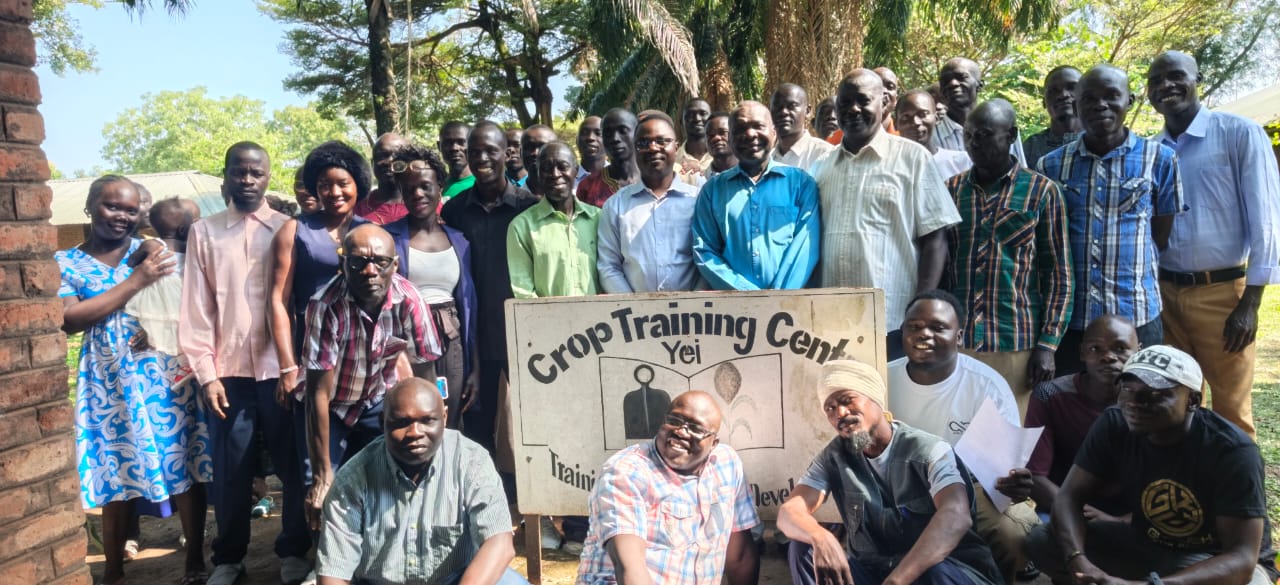
The University of Juba, through its Holistic Agriculture-Fisheries Resilience for Value Chain Empowerment and Sustainable Transformation (HARVEST) Project, convened a stakeholders’ research dissemination meeting in Yei River County on Monday to discuss strategies for strengthening agricultural resilience and improving local seed systems.
The meeting, held at the CTC Main Hall in Yei, brought together county policymakers, representatives of non-governmental organisations working in food security and livelihoods, private sector actors, and farmer representatives to review findings from ongoing agricultural research and explore practical approaches to improving seed production and distribution in the county.
According to the organisers, the forum provided an opportunity to share research findings and farmers’ experiences while jointly identifying pathways toward establishing a resilient and sustainable seed system capable of supporting agricultural productivity and food security in the region.
Participants exchanged knowledge on challenges affecting the agricultural sector and explored opportunities for collaboration aimed at strengthening evidence-based interventions and promoting sustainable farming practices across Yei River County.
The initiative forms part of the HARVEST Project’s broader objective of enhancing resilience within agriculture and fisheries value chains while empowering farming communities through research-driven solutions and sustainable development strategies.
Speaking on behalf of the organisers, Dr. Tony Ngalamu emphasised the importance of multi-stakeholder collaboration in addressing agricultural challenges and improving livelihoods for farming communities across South Sudan.
Yei River County official Asiki Moses noted that the research document had been developed at the project level and appealed to the University of Juba to share the findings with local authorities for integration into county agricultural policies.
He encouraged farmers to translate the knowledge gained during the engagement into practice, describing it as essential for improving agricultural production and supporting local communities.
Meanwhile, Rose Doru Simbe called on the government to expand support for farmers at the grassroots level to stimulate agricultural development and improve livelihoods.
She welcomed the efforts of the government of South Sudan to develop policies aimed at supporting farmers and increasing agricultural production across the country.
Rose further highlighted the importance of improving coffee production in Yei, saying increased investment in the sector could boost farmers’ incomes and create opportunities for greater participation of young people in agriculture.
The deputy executive director of Yei River County, Isaac Peter Zakayo, commended farmers for participating in training on seed storage techniques, noting that proper storage methods would help preserve seeds for longer periods and improve future harvests.
Zakayo also observed that the soil conditions in Yei differ from those in other parts of the country, stressing the importance of promoting locally adapted seed varieties suited to the county’s agricultural environment.
He further called for increased training opportunities for members of cooperative societies to strengthen their technical knowledge and improve agricultural productivity.
The training attracted more than 50 participants drawn from various cooperative groups operating in Yei River County.
Earlier, the Commissioner of Yei River County, Samuel Henry Malimbo, commended researchers from the University of Juba for promoting the use of locally preserved seeds, arguing that imported seed varieties often fail to germinate effectively under local conditions.
Commissioner Malimbo called for stronger cooperation among development partners, government institutions, and local communities to improve livelihoods and strengthen food security across the county.
The stakeholders’ engagement is expected to contribute significantly to the development of a stronger agricultural sector and a more resilient seed system in Yei River County and beyond.