



By Lodu William Odiya
South Sudan, as a whole has one of the highest maternal mortality ratios globally. Recent health estimates put the country’s maternal death rate at roughly 692 deaths per 100,000 live births, far above the global average and international targets and these figures likely understate the true toll.
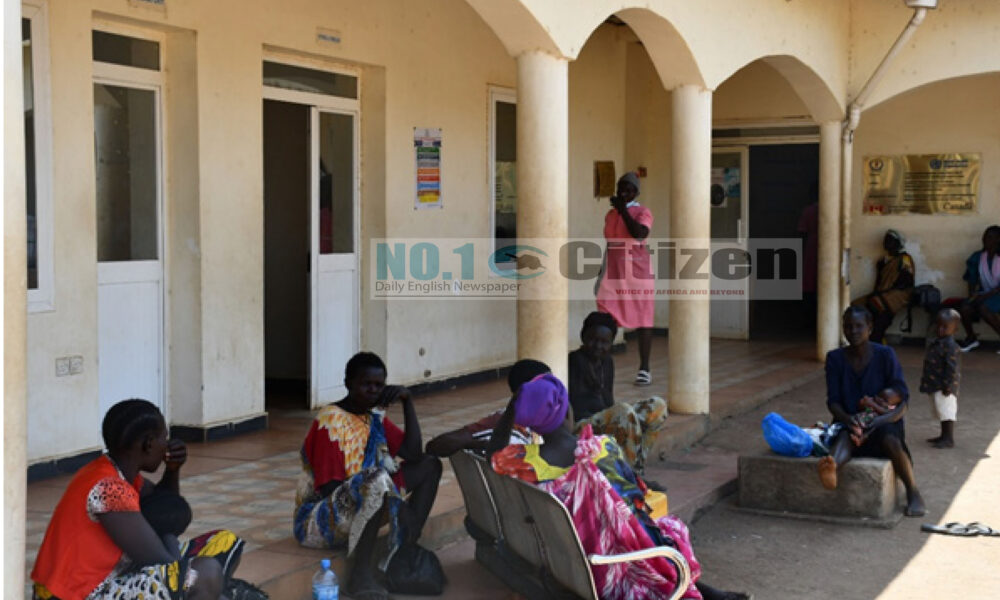
In remote areas like Torit County, these national figures translate into real daily danger for women. Many dies during pregnancy, in childbirth or in the days immediately after delivery from causes that are preventable with even basic medical care.
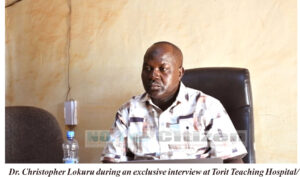
In an exclusive interview with No. 1 Citizen Daily English Newspaper, Dr. Christopher Lokuru, a medical Director at Torit Teaching Hospital said the main medical reason why mothers die during childbirth is due to over bleeding.
“There is always medical factors, we do have underlined medical conditions that associate with medical conditions during deliveries. Nevertheless, the common that we are due to bleeding. For the haemorrhage to happen there is reason due to delays. We can consider that one of the factors that are mostly affecting those mothers who are coming from the outskirts of Torit like the Boma and Payam as well” he explained.
He underscored that delivery at home is also one of the reasons for some of the mothers to die due to uncontrol bleeding.
“The mothers prefer delivery at home despite the fact they are given ANC cards. They have been coming for routine investigation, ANC visit but some can decide to deliver at home. If the situation becomes different, she can die. Because at home they cannot control the bleeding”
Lokuru further linked traditional aspect as a factor contributing to death of mothers during child birth, adding that poor referral system to intervene in case of any emergency cases.
“Some do not believe that hospital is everything. They depend on the traditional birth attendant that she can manage me if I am delivering and this is also the reason why some of our mothers die at the outskirt of any county or state hospital” Lokuru added.
He also stressed that financial constrain and limited transport system has always been a contributing factor during childbirth incidences.
“Some of them die due to financial constrain whereby nothing that you can provide to bring them to the hospital and to cater for some demands during the delivery. Nether the less, we do not have enough ambulances. The ambulance is only one and is also grounded” Dr. Lokuru added.
He urged the leadership from the states to the National government to review and allocate enough funds for the health sector.
“My message to our leadership from the state, National ministry of health, Governor and the President of the Republic of South Sudan is that they need to review the budget that is allocated for health sector because we do have issues from the donors that they are no longer supporting” he urged.
He further added that the government should look for ways to improve the health sector, citing that the sector is the pillar of the nation.
“We do not want to depend on the outside funding which donors do flow bringing to South Sudan. The good example is what is happening now, all of them have gone back. Trump issue is very clear to everyone. So, the government of South Sudan must make some changes towards health and other sectors to improve the lives of south Sudanese citizen” he explained.
Dr. Lukuru urged the government to be strong enough in managing the resources in order to create development in the country.
“We have money but the way people mange this money is not proper. Oil and none-oil revenue is enough, we claim that it is financial crisis, this is not, it is mismanagement” he stated.
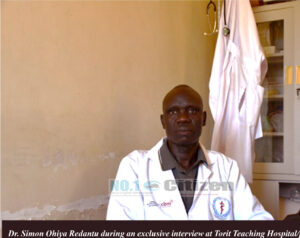
Meanwhile, Dr. Simon Ohiya Rinato, In-charge of the maternity ward emphasized that some other condition like obstructive labor can also lead to death of women during child delivery.
“Actually, there are lots of conditions that leads to mothers dying during childbirth. Some like obstructive deliveries and some other previous conditions and poverty link including other infections” he said.
He stated that his department always give assistance to the women hence having a number of fifty children being delivered in normal circumstance in the hospital.
“We have fifty to eighty normal labor per month without interfering with instrument during delivery” Ohiya stated.
“Some women believes that the labor is a normal procedure some of them die due to ignorance. They do not know what the doctors are targeting and they do not know that complications can occur any time. Even to the extend maybe previous Caesarean section has been done others still want to try giving birth at home” Dr. Ohiya highlighted.
However, he underscored that Torit teaching hospital has 20 registered midwives that can handle the situation of women during childbirth.
Ohiya urged the government to put more attention to the students undergoing training at the states teaching hospitals as it not benefits the leaners but also the hospitals.
“Government should take it as concern because we are benefiting from this skilled personnels within this institute in al departments not only in maternity here. Maybe there some other needs. The government should focus on them for the purpose of this hospital” he said.
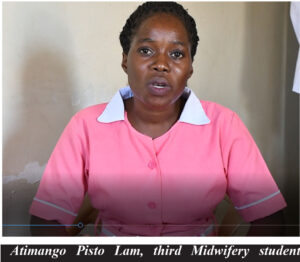
On her part, Atimango Pisto Lam, a third year Midwifery student and intern at the hospital’s maternity section emphasized the need to provide the medical and midwifery internees with medical equipment in order to conduct their medical procedures.
“Some of the challenges that we have been facing here is lack of materials for us to simplify our work. Right now, we were told that if you want to conduct a procedure you need to come with your gloves and cloth which make it difficult to do our procedures” Atimango explained.
However, Adrako Winny, a 22-year-old pregnant woman emphasized the to advise women to deliver in the hospital than delivering at home in order for doctors to monitor their situation that may arise.
“It is good to advise women to deliver in the hospital than at home is because you may get when the time for labor at home there is no one who is going to monitor so it will be difficult whereby you get the membranes can rougher or bleeding may happen and there will be no one to help” she said.
Winny noted there are some mothers who are not educated and also attending ANC ends up losing her baby or her self if she is not rushed with to the hospital
“It is good to educate the mother to give birth in the health facility because once the contraction started, the doctors are the one to check whether it is true labor or false labor or check whether the baby is at the right position or not” Winny explained.
“What I have observed was last year, I heard and witness a woman who did there. That one did give birth virginally but they did caesarean section. I was trying to ask why they did not help that mother but they were saying that there was delay” she added.
She underlined that many women fear to go to the health facility for delivery due to some demands which are required during labor time.
“It is good to give birth at the facility rather than giving birth at home and blood remain in the womb, they don’t clean it very well and after giving birth the stomach remains as if the person is still pregnant those are the disadvantage” she said.
She appealed to the government to provide all the necessary requirement needed at the hospital in order to boost childbirth in the health facility.
“When a mother starts moving for ANC, I can compare it by my self. There they use to say it is compulsory that you need to buy gloves, carpet, you have to buy cotton wool. So, these mothers are fearing. What I can tell is that the government should provide globes for mothers in the maternity, they should not request it from these mothers. If you do not have, they will say they are not going to touch you” she explained.
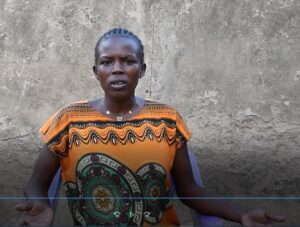
Jenifer Khemisa, a 21-year-old pregnant mother appealed to the fellow women to practice delivery in the health facility as it allows health workers to monitor your conditions.
“It is better for women to women to give birth in the health facility in order to avoid other complication like bleeding which my lead to death. If you also give birth in the hospital, they will quickly help you. Secondly, vaccination will be given to your child or in case of any complication to the child the doctor will help too” she explained.
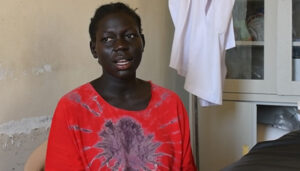
In a quiet village on the outskirts of Torit, Susan Hangbodi, a mother of seven, speaks with calm confidence about her childbirth experiences.
She underscored that she has delivered all her children at home without complications, relying on traditional birth attendants and family support, reflecting a common rural practice.
“Since I started giving birth to my children from the first one to the seventh child. This is because we are living very far from the health facility. This is the eight one, they told me that I was going to give birth in February but it just happens abruptly in January where the baby got stuck because the baby was big” she explained.
The health system in Torit County of Eastern Equatoria state has faced challenges, including low state and national budget and evacuation of international health personnels.
These issues have disrupted the availability of drugs and medical supplies, impacting the quality of care for pregnant women and newborns.
The ongoing conflict and violence in South Sudan has created a hostile environment for childbirth, leading to a decline in the utilization of health facilities for pregnancy and delivery care.
Addressing these challenges is crucial for improving maternal health outcomes in Torit County and ensuring the safety and well-being of women during childbirth.
In South Sudan, training more midwives, expanding emergency obstetric care, improving transport and roads, and educating communities about prenatal care could dramatically reduce deaths.
These are practical steps with proven impact yet they require funding, political will, and sustained effort at local, state, and national levels.
Ending childbirth deaths in Torit County will mean transforming a failing system into one that protects women at their most vulnerable moments.