


By Alan Clement
Flooding in Fangak County has disrupted access to health services and displaced thousands of residents, lawmakers said, warning that communities continue to struggle as vast areas remain submerged.
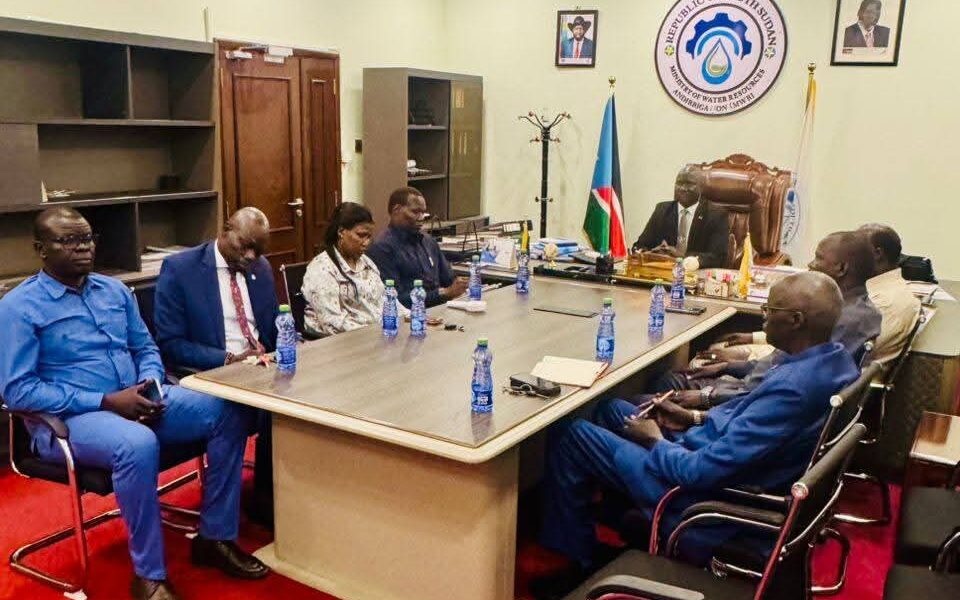
In a statement from the Ministry of Water Resources and Irrigation, the members of parliament representing Fangak County raised the alarm during a meeting with James Mawich, in Juba, where they outlined the humanitarian and health challenges facing residents affected by years of flooding.
The lawmakers said large parts of the county have remained underwater since 2020, forcing communities from their homes and severely limiting mobility, including access to basic health services.
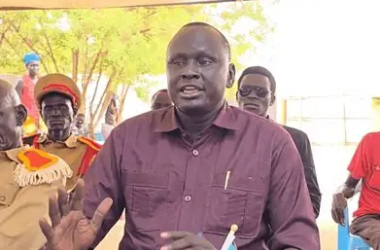
Speaking on behalf of the delegation, Fangak County MP James Kok described the flooding as a prolonged crisis that has left many residents struggling to survive.
“The flooding has had devastating effects on our communities since 2020,” Kok said in a statement noting that “large parts of Fangak remain submerged, leaving people displaced and struggling to survive.”
He said the situation has particularly affected access to medical care, as many residents are unable to reach health facilities due to the vast floodwaters covering roads and settlements.
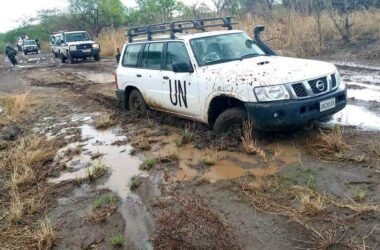
According to the lawmakers, transportation across the county has become extremely difficult, prompting them to request urgent support, including speedboats that can be used to reach remote communities and transport patients to health facilities.
They also appealed for the provision of a functional generator to support essential services in the area, including health operations that require reliable electricity.
Fangak County lies in Jonglei State, one of the regions hardest hit by recurrent flooding in recent years. Seasonal floods along the White Nile and surrounding wetlands have inundated large parts of the state, displacing thousands of people and disrupting livelihoods.
Humanitarian agencies have repeatedly warned that prolonged flooding in parts of Jonglei and neighboring states has worsened food insecurity, damaged infrastructure, and increased the risk of disease outbreaks due to contaminated water and poor sanitation conditions.
In Fangak, lawmakers say the crisis has also severely affected local health systems, as flooding has isolated communities and limited the movement of medical supplies and personnel.
To address the situation, the MPs urged the Ministry of Water Resources and Irrigation to mobilize development partners to support flood protection measures, including the construction of a dike to prevent water from inundating residential areas.
They argued that such infrastructure would help protect communities from future flooding and reduce the humanitarian burden that residents have faced for several years.
Responding to the concerns, Minister James Mawich acknowledged the difficulties facing the people of Fangak and said the government would work with relevant partners to explore possible interventions.
“I would like to thank the MPs for presenting the concerns of their constituents,” Minister Mawich said adding, “The ministry will work with relevant partners to support the people of Fangak.”
The meeting was also attended by the Undersecretary in the Ministry of Water Resources and Irrigation, Sultan Lam Tungwar, who recently assumed the role.
While government officials pledged to coordinate with partners, lawmakers emphasized the urgency of the situation, noting that many families remain displaced and dependent on limited humanitarian assistance.
Flooding has become a recurring challenge across parts of South Sudan, particularly in low-lying areas of Jonglei State where communities rely heavily on seasonal water patterns for grazing and fishing but remain vulnerable to extreme weather conditions.
Climate variability and poor drainage infrastructure have contributed to the increasing frequency and severity of floods in recent years.
For residents of Fangak County, however, the immediate concern remains survival and access to essential services, especially healthcare, as communities continue to navigate life in flood-affected areas.
The lawmakers said urgent intervention will be needed not only to address the current crisis but also to implement long-term flood management solutions that can protect vulnerable communities from future disasters.