

By: Hon. Sarah Cleto Rial, Minister of Health – Republic of South Sudan
The past and the present have always been intertwined, and nowhere is this more evident than in the evolution of our nation’s healthcare. For centuries, the people of South Sudan have relied on traditional healing—using herbs for stomach-aches and natural clay for skin ailments—to sustain life and preserve our communities. The use of common indigenous plants, such as Azadirachta indica (the neem tree) for malaria and fever, Acacia nilotica and Cissus quadrangularis for various remedies, are widespread practices. Traditional healers, midwives, and herbalists commonly work with Boma Health Workers and Primary Health Care Units to provide care to communities.
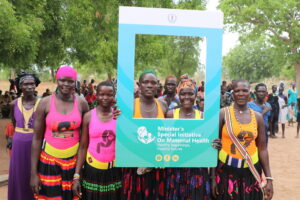
Today, we stand at a crossroads where these time-honoured practices meet the advancements of modern science. To build a truly resilient health system, we must ensure these two worlds work hand in hand.
Our vision for the future is anchored in the South Sudan National Health Policy 2016–2026, which calls for a “Community Anchored Health System.” This policy emphasizes that for health services to be sustainable, they must be culturally accessible and responsive to the needs of our people.
Evidence from global best practices demonstrates that responsible integration of traditional medicine strengthens national health systems. This complementarity principle is recognized worldwide. In December 2025, I participated in the Second WHO Global Summit on Traditional Medicine in New Delhi, India. The summit provided a global platform for sharing best practices, exploring collaborations, and promoting innovative approaches to healthcare. There, I advocated for integrating evidence-based traditional medicine into national health systems, highlighting the need to preserve cultural heritage while upholding scientific standards and patient safety. During my visit to the All-India Institute and Hospital of Ayurveda, I observed practical applications of traditional medicine in promoting holistic health. These experiences reinforced the value of combining cultural wisdom with modern clinical practice to ensure safe, effective patient care.
South Sudan can incorporate traditional healing into its health system in a way that is culturally respectful, scientifically sound, and patient focused. Recent evidence from the 10th East African Health and Scientific Conference (EAHSC), hosted in Juba in June 2025, further reinforces this necessity. A primary sub-theme of the conference was the “Integration of traditional medicine into healthcare systems,” where regional experts discussed bridging the gap between traditional knowledge and clinical practice.
Traditional providers blend cultural beliefs with remedies, offering integrated and holistic care when it complements modern medicine. For instance, traditional midwives commonly monitor pregnant mothers, many of whom have poor access to modern healthcare and refer those they deem at risk. This is the complementarity we seek.
However, for this partnership to succeed, we must address critical challenges. The 10th EAHSC highlighted the urgent need for:
- Scientific Evidence: We must prioritize research into the safety and efficacy of herbal and traditional medicines to ensure they provide the best outcomes for patients.
- Intellectual Property: We must protect the rights of traditional knowledge holders and practitioners, ensuring their contributions are respected and formalized within our legal frameworks.
- Standardization: While modern medicine offers targeted interventions, it currently faces funding pressures that can limit access in rural areas. Integrating evidence-based traditional medicine is a key strategy to expand our reach.
The goal is not to substitute one for the other, but to create a system where traditional healers and modern clinicians operate side by side. This integration is a vital component of achieving Universal Health Coverage (UHC), ensuring that healthcare is not only geographically and financially reachable but also culturally appropriate.
Building this bridge requires constant dialogue and shared responsibility. We must support research into widely used remedies while simultaneously expanding the clinical capacity of our formal health institutions. By combining community trust with scientific rigor, we can build a health system that truly reflects the spirit and the needs of the South Sudanese people.
The Ministry of Health remains committed to this path of partnership. Our future depends on our ability to honour our roots while embracing the innovations that save lives. Together, we can ensure that every citizen has access to the safe, effective, and respectful care they deserve.