

By Sabri Dibaco
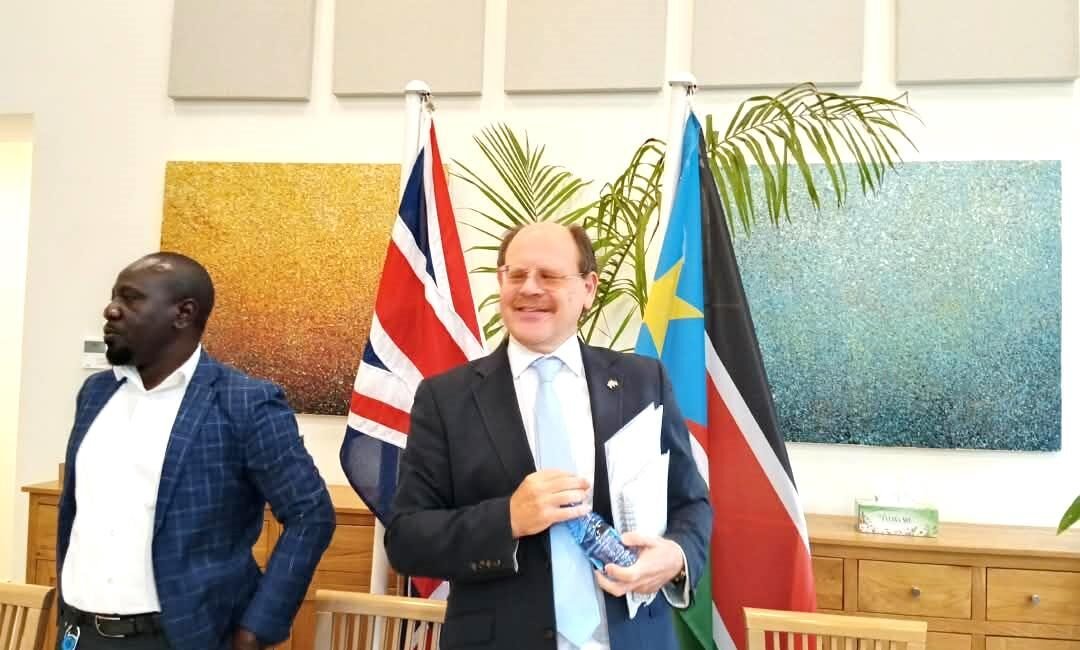
The outgoing Ambassador David Ashley has raised concern over the killing of humanitarian workers in several parts of South Sudan, saying aid personnel have lost their lives while carrying out essential services for vulnerable communities across the country.
Speaking about the humanitarian situation, Ashley stated that humanitarian workers continue to operate in difficult and insecure environments as they travel to communities in need of assistance.
“Humanitarian workers have been killed in several parts of the country as they were delivering services to vulnerable people across the states,” Ashley said.
He emphasised that the deaths of humanitarian personnel are a serious concern because aid workers play an important role in supporting communities affected by conflict, displacement, hunger, and other humanitarian emergencies.
According to Ashley, humanitarian organisations depend on safe and reliable access to communities to deliver assistance, particularly in areas where people have limited access to basic services.
He emphasised that humanitarian workers should be allowed to perform their duties without being exposed to violence or unnecessary risks.
“They are there to support vulnerable people and to deliver services to communities that need them most,” he said.
Ashley’s remarks highlight the security challenges faced by humanitarian organisations operating in South Sudan, where insecurity in some areas has continued to affect the movement of aid workers and the delivery of assistance.
Humanitarian personnel provide a wide range of services across the country, including food assistance, healthcare, clean water, sanitation, education, protection, and support to displaced families.
Their work is particularly important in remote communities where government and other public services remain limited.
South Sudan continues to face significant humanitarian needs, with millions of people relying on humanitarian assistance. Conflict, displacement, flooding, food insecurity, and limited infrastructure have contributed to the vulnerability of communities in different parts of the country.
Humanitarian organisations often have to travel long distances, including through areas affected by insecurity, in order to reach people in need. Aid workers can therefore face threats such as armed attacks, road ambushes, looting, harassment, and restrictions on movement.
The killing of humanitarian personnel can also have consequences beyond the loss of individual lives.
When aid organisations consider an area too dangerous for their staff, humanitarian operations may be reduced, suspended, or temporarily relocated, leaving vulnerable communities with fewer sources of assistance.
Ashley said the safety of humanitarian workers must therefore remain an important concern for all actors involved in maintaining security and delivering assistance.
He called for greater respect for humanitarian personnel and the work they carry out on behalf of vulnerable populations.
“The people delivering humanitarian services need to be protected so that they can continue reaching those who are most in need,” Ashley said.
The ambassador’s comments come as humanitarian organisations continue to call for improved access and security for aid operations across South Sudan.
For communities affected by conflict and other emergencies, humanitarian workers are often among the first people to arrive with essential assistance.
Their ability to reach these communities depends largely on security, cooperation from authorities and armed groups, and safe access along roads and within areas affected by violence.
The killing of aid workers has therefore raised wider questions about the safety of humanitarian operations and the responsibility of all parties to protect personnel providing life-saving assistance.
Ashley said continued support for humanitarian workers is necessary to ensure that vulnerable people across South Sudan are not left without assistance because of insecurity.
He urged stakeholders to recognise the humanitarian nature of aid operations and ensure that workers can perform their responsibilities safely.
The outgoing ambassador also noted that humanitarian assistance remains critical to communities facing difficult circumstances, making the protection of aid personnel an important part of ensuring continued humanitarian support across the country.
As South Sudan continues to deal with humanitarian and security challenges, humanitarian organisations are expected to maintain their operations in support of vulnerable populations.
However, the safety of their personnel remains a key condition for ensuring that assistance reaches the people who need it most.