


By James Innocent
the Reconcile International, a regional faith-based organization in Yei County has reaffirmed the organization’s commitment to promoting peace and reconciliation across South Sudan.
The organization also promised sustainable livelihoods in South Sudan, the Democratic Republic of Congo, and the broader East Africa region.
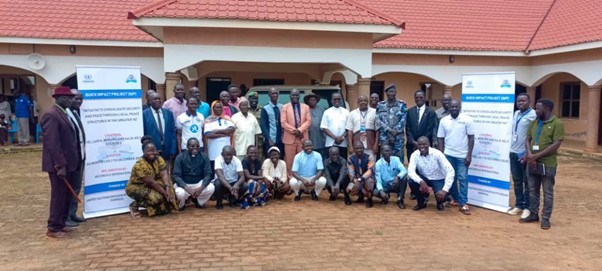
Speaking during a launch of a forty-nine thousand United state dollar project in Yei, the Executive Director of Reconcile International, Rev. Peter Tibi said the project would strengthen local peace efforts in an area affected by ongoing insecurity and intercommunal violence.
“We are working in partnership with religious leaders and under a national mandate for peacebuilding, which includes white diplomacy as a tool for conflict resolution,” he said,
Rev. Tibi noted that deteriorating security in Yei has made the project critical, cited the recent attacks, abductions, and restrictions on movement along key roads, which have endangered civilians and hampered humanitarian access.
“We’ve seen the failure of the cessation of hostilities agreement being respected. The persistence of armed conflict between government forces and hold-out groups continues to put lives at risk, especially in Central Equatoria,” he said.
The United Nations Mission in South Sudan (UNMISS) team leader, James Mugo emphasized the mission’s support for local peace efforts.
He highlighted the impact of capacity-building efforts by organizations such as Community Empowerment for Program Organization (CEPO), Whitaker Peace and Development Initiative (WPDI), and Finn Church Aid in equipping peace committees and religious leaders to respond to the challenges.
“Despite the ongoing risks, we believe community-based structures supported by trained and committed leaders can make a meaningful difference,” Mugo said,
He condemned recent attacks on civilians and humanitarian workers in the central Equatoria State.
Yei River County Commissioner, Emmanuel Taban Seme echoed the urgency of the initiative and welcomed the return of Major General John Laul Tong to the area, describing it as an important step toward building trust between security actors and local communities.
“This project brings renewed hope to the people of Yei,” Taban said. “Our county played a crucial role in the country’s path to independence, and it is our shared responsibility to ensure peace takes root here once again.”
Seme called for the revival of the Interfaith Peace Committee and urged citizens to speak openly about their concerns, assuring them of government protection. He also appealed to armed groups to allow peace and humanitarian actors to operate freely without fear of violence.
“The path to peace begins with transparency and collaboration,” he said. “With this project, we take another step toward securing a peaceful and united Yei.”
Early in July, the residents in Yei were urged authorities and development partners to renew and strengthen their commitment to peace, reconciliation and security in the region.
The call comes in the middle of continued insecurity, including roadside ambushes, abductions and general fear along the county’s key rural routes.
For many residents, peace is seen not just as the absence of violence, but as the foundation for social harmony, economic recovery and the return of displaced families.