


By Jurugo Emmanuel Ogasto
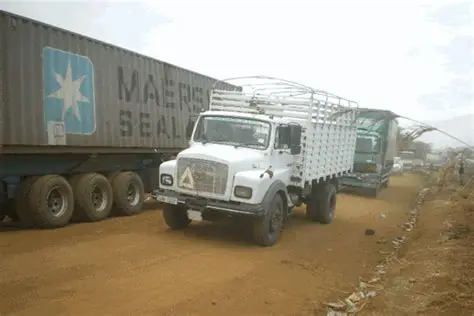
More than 1,000 trucks remain stranded in a traffic gridlock stretching approximately seven kilometers from Bibia Centre to the Elegu border, as truck drivers enter their sixth day of an ongoing strike over insecurity along the South Sudan-Uganda corridor.
The drivers, many of whom transport essential goods into South Sudan, have halted movement in protest against what they describe as “unbearable and persistent insecurity.
Their grievances include attacks, looting, and a lack of protection along the route, particularly near border entry points such as Nimule and Elegu.
The situation has not only disrupted regional trade but also raised alarm among local communities, especially the boda-boda cyclists who operate in the busy border areas.
Several riders and their leaders have expressed fears that the prolonged congestion poses serious safety risks.
Speaking to the No. 1 Citizen Newspaper, James Ojara, a boda-boda cyclist’s leader at Bibia Centre, warned that the stationary trucks have created a dangerous environment for both riders and pedestrians.
“These trucks are occupying the entire road stretch. We are forced to squeeze through narrow spaces, and this increases the chances of accidents. If nothing is done urgently, we may start recording fatalities.”
Other cyclists echo Ojara’s concerns, highlighting how the protest is impacting daily livelihoods. Peter Ladu, a cyclist’s representative, noted that the resulting uncertainty has kept customers away.
“We depend on free movement to earn a living. Now, with this jam and uncertainty, customers are avoiding the route. We are losing money every day,” Ladu explained.
One of the female Boda Boda riders in the area emphasised the vulnerability of riders, especially during nighttime.
“At night, it becomes even more dangerous; the trucks block visibility, and there is fear of criminals taking advantage of the situation. Authorities must intervene quickly,” Sarah Atim said.
Meanwhile, Moses Okot, another motorcyclist, called on both Ugandan and South Sudanese authorities to engage the striking drivers and find a lasting solution.
“This is not just about the drivers anymore; it is affecting the entire border economy. We need immediate dialogue and action to restore normalcy,” Moses said.
Efforts to obtain a response from relevant authorities in both South Sudan and Uganda were unsuccessful, as repeated calls went unanswered by the time of publication.
The Elegu-Nimule border is a critical trade gateway between the two countries, facilitating the movement of goods ranging from food supplies to construction materials.
Any disruption along this route has far-reaching implications for markets and livelihoods on both sides.
As the strike drags on, pressure continues to mount on authorities to address the drivers’ grievances and ensure security along the corridor, while also preventing further risks to local communities navigating the congested border zone.