


By Chol D. Johnson
The Chief of Defence of the South Sudan People’s Defence Forces (SSPDF), Gen. Santino Deng Wol, has directed former opposition-aligned forces to remain on standby in preparation for integration.
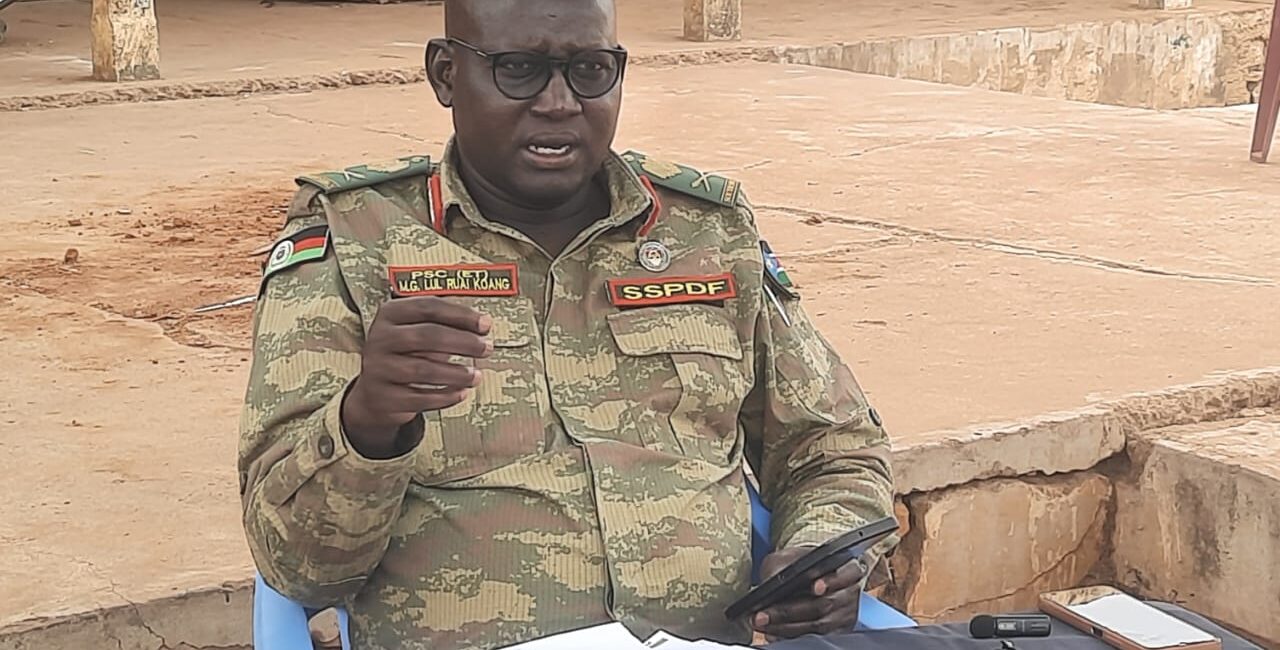
According to SSPDF spokesperson Lul Ruai Koang, the directive applies to several groups that previously abandoned rebellion and pledged allegiance to the government but have not yet been fully absorbed into the national army or other organized forces.
According to the order, the forces will be integrated into government structures and were urged to remain on standby pending further instructions on their formal integration and reorganisation.
Lul said the affected groups include the Agwelek forces, Bahr el Ghazal, and Equatoria-based groups operating in Yei, Maridi, Koda, and Mundri, among others.
The SSPDF leadership urged all listed groups to remain prepared for possible relocation to designated training centres as part of ongoing security sector reforms and the unification process.
“South Sudan belongs to all South Sudanese, and there is room for every citizen in building a peaceful, united, and prosperous nation,” Gen. Santino Deng Wol was quoted as saying, adding that citizens should embrace peace, unity, and development instead of violence.
The directive comes amid renewed efforts to advance the implementation of security arrangements under the country’s peace agreement, which provides for the unification of various armed groups into a single national force.
Gen. Santino, who was recently reappointed as Chief of Defence, also referenced a ceasefire understanding with the SPLM-IO during his swearing-in ceremony last week.
Meanwhile, civil society organisations have welcomed the directive with cautious optimism.
Edmund Yakani, executive director of the Community Empowerment for Progress Organisation (CEPO), described the move as positive in principle but warned that implementation will be challenging given the current state of the peace process.
“We appreciate the spirit behind it, but the environment is difficult. The mechanisms of security arrangements are already weak, and major parties are in confrontation,” Yakani said.
He stressed that any integration process must strictly follow the provisions of the peace agreement, particularly Chapter II on security arrangements, warning that parallel or uncoordinated integration efforts could undermine the broader unification process.
Yakani also called for full adherence to ceasefire commitments by all parties as a necessary step toward restoring trust and advancing security sector reforms.
Despite the optimism expressed by officials, analysts note that delays and mistrust within the security mechanisms continue to pose serious challenges to the full unification of armed forces in South Sudan.