


By Sabri Dibaco
Women and girls at Juba’s Protection of Civilians (PoC) site 1 are increasingly vulnerable to rape and violence as sanitation facilities collapse, forcing residents into unsafe areas for open defecation and firewood collection, camp leaders warn.
PoC 1 Secretary General Deng Both Riek stressed that the departure of humanitarian partners responsible for hygiene had left toilets full and unusable, driving residents into the bush, where they face attacks.
“Since the partners who run the hygiene and sanitation have left the PoC, people have experienced some challenges because the latrine got full. Then this forced people to go for open defecation outside the camp,” he explained.
Deng noted that women and girls are particularly at risk. “Such cases are happening, but sometimes women don’t report when it happens because of traditional culture,” Deng said, noting that stigma and lack of support services prevent survivors from seeking medical help.
He further emphasises that economic hardships have compounded the danger. According to Deng, many women leave the camp to collect firewood because they cannot afford charcoal, exposing them to gangs.
“Then when they meet with the wrong people, they can also be raped in that circumstance,” Deng added.
Camp leaders accused government institutions of failing to respond despite repeated appeals. “We meet with the people from the Ministry of Health in Central Equatoria and also from the national government. We also discussed with them these issues, but there is no response,” Deng said.
He noted that conditions have worsened since responsibilities shifted from the United Nations Mission in South Sudan (UNMISS) to government authorities.
Chairlady Tabitha Gamlong described widespread trauma among women, particularly survivors of sexual violence and displaced families from Jonglei State.
“The women now, they are traumatised in two ways. Some of them suspect that they are victims (HIV/AIDS positive). They don’t know who is raping them,” she said.
She said that the alleged attackers often conceal their identities with masks, leaving survivors unable to identify perpetrators.
She also stressed that hunger and economic distress are deepening the crisis. “Most of them are traumatised because they are really hungry. When your children are dying, and you have nothing to do,” Tabitha said.
She called for counseling centers and livelihood support programs inside the camp to help women recover and rebuild their lives.
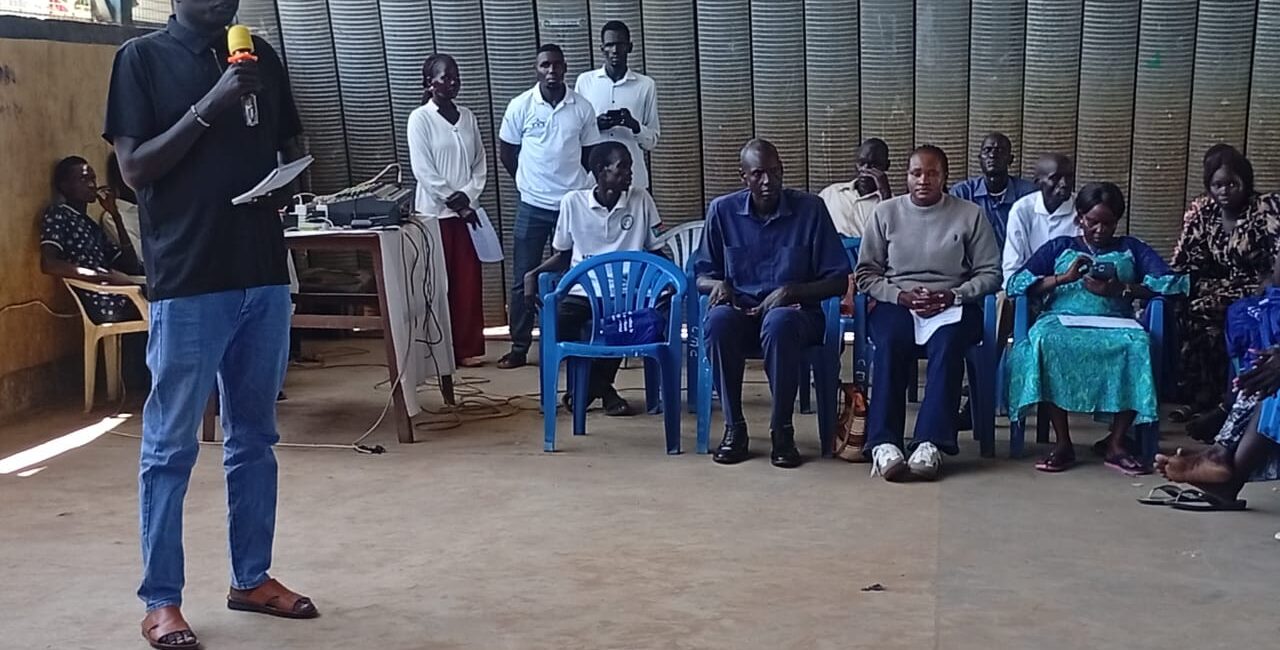
The civic education activity focused on the Commission for Truth, Reconciliation and Healing (CTRH) and the Compensation and Reparation Authority (CRA) Act.
It was facilitated by the Centre for Inclusive Governance, Peace and Justice (CIGPJ) with support from Norwegian People’s Aid (NPA).