


By James Innocent
The Lasu community in Yei River County on Saturday inaugurated its newly elected executive committee, with leaders pledging to promote peace, unity, development, and youth empowerment as they begin a new chapter of community leadership.
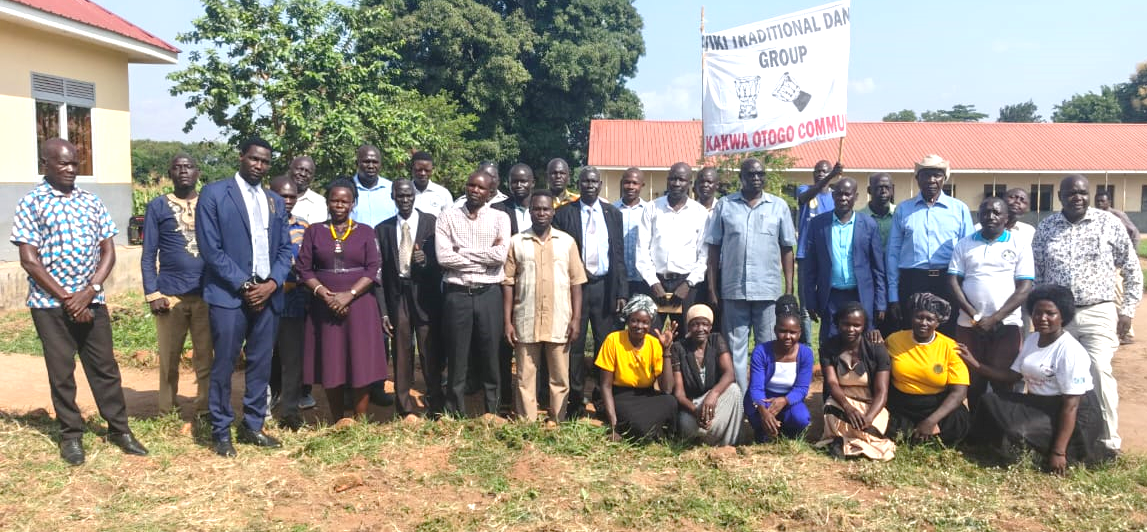
The swearing-in ceremony brought together county government officials, traditional and religious leaders, women, youth representatives, and members of the Lasu community from across Yei River County.
Speaking during the ceremony, Yei River County Commissioner Samuel Henry Malimbo congratulated the newly elected leaders and urged them to serve with integrity while prioritising unity and reconciliation within the community.
“The new leadership should work to unite the people and avoid actions that may divide the community,” Malimbo said.
The commissioner pledged the county government’s support in advancing development initiatives in Lasu Payam, particularly programs aimed at creating employment opportunities for young people and improving livelihoods.
He praised the historical contribution of the people of Lasu to both Sudan and South Sudan’s political and social development, encouraging the community to build on that legacy through peaceful coexistence and collective action.
Malimbo also urged residents to embrace agriculture as a pathway to economic growth, encouraging farmers to make full use of tractors and other agricultural equipment provided through ongoing development initiatives to boost food production.
As a show of support for the newly elected leadership, the commissioner donated one million South Sudanese pounds (SSP 1 million) to facilitate the establishment and operation of the Lasu Community office.
In his inaugural address, the newly elected chairperson of the Lasu community in Yei River County, Logulomo Morris Wuse, thanked community members for the confidence they had placed in the new executive.
“We are deeply humbled by the trust you have placed in us to serve as your leaders. This moment is not about us, but about the people of Lasu, united in purpose and bound by our shared history, culture, and destiny,” Wuse said.
He outlined an ambitious development agenda centered on peacebuilding, reconciliation, improved healthcare, education, agriculture, cultural preservation, environmental protection, and infrastructure development.
Among his priorities, Wuse said the executive committee would advocate for improved health services, the revival of schools—including Nyori Secondary School—and stronger support for farmers through agricultural cooperatives and partnerships with development organisations.
He also announced plans to lobby for the establishment of a Lasu Cultural Centre to preserve the community’s traditions, songs, folklore, language, and cultural identity for future generations.
Recognising the importance of inclusive leadership, Wuse pledged that his administration would conduct regular outreach visits to villages and sub-villages to engage directly with residents, identify their priorities, and formulate community-driven development plans.
On infrastructure, the chairperson appealed to both the government and development partners to improve the road network linking Lasu and Tokori, noting that poor road conditions continue to limit movement, trade, and access to essential services.
“Let us rise together, hand in hand and heart to heart, to build the Lasu we dream of,” Wuse urged.
Representing women, Joice Congole called for stronger unity and cooperation among community members and urged the new leadership to promote inclusive governance by ensuring women are adequately represented in decision-making processes.
She emphasised the need to uphold South Sudan’s 35 percent affirmative action commitment by creating opportunities for women to participate meaningfully in community leadership and development initiatives.
Speaking on behalf of the youth, Bosco Amule Duku commended residents for attending the inauguration in large numbers and highlighted the growing challenges facing young people in the community.
He said many educated and qualified youth remain unemployed despite their potential, while others are unable to continue their education because of the country’s economic difficulties and limited access to vocational training opportunities.
Duku appealed to government authorities, development partners, and community leaders to invest in education, skills development, and job creation initiatives that would empower young people to contribute to the community’s development.
The inauguration marks the beginning of a new leadership term for the Lasu Community, with expectations that the executive committee will work closely with local authorities, development partners, women, youth, and traditional leaders to promote peace, strengthen social cohesion, and advance sustainable development across Lasu Payam and the wider Yei River County.