

By Sabri Dibaco
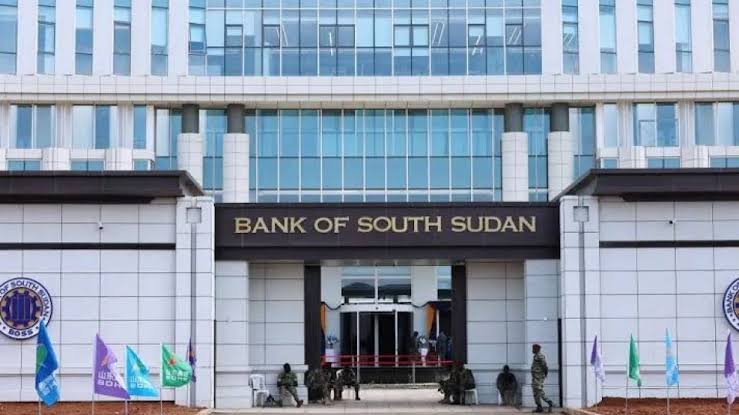
Staff of the Bank of South Sudan have staged a peaceful sit-in protest at the bank’s headquarters in Juba, demanding unpaid incentives, restoration of medical insurance, and settlement of outstanding benefits.
According to an informed source familiar with the matter, who requested anonymity, the employees began the industrial action after a two-week ultimatum to management expired without their demands being fully addressed.
However, after a long time of low response, they protested on Tuesday.
The source said the workers reported to the bank as usual but refused to enter their offices or perform their duties, instead gathering peacefully in the compound and lobby of the institution.
The anonymous source said the employees’ grievances Centred on three key issues: the suspension of their medical insurance, unpaid staff incentives and allowances dating back to 2025, and outstanding benefits that have accumulated over the first seven months of 2026.
“The staff have been entitled to medical insurance under the bank’s policy, but since the beginning of this year it has not been implemented. They are also demanding incentives and allowances that have not been paid,” the source said.
The source added that the unpaid benefits include medical insurance, housing-related allowances, and other staff entitlements, some of which are denominated in U.S. dollars.
According to the source, staff also complained that although they receive salaries through commercial banks, many have struggled to access their salaries because of the country’s cash shortages.
The source said employees had given the bank’s management two weeks to resolve the issues during a general staff meeting held earlier, warning they would stop working if no action was taken.
Following the sit-in, Bank of South Sudan Governor Johnny Ohisa Damian addressed the protesting staff, acknowledging the existence of unpaid arrears but attributing the delays to the country’s economic difficulties.
In remarks shared on the Bank’s official Facebook page, Governor Ohisa said the shortage of foreign currency had affected the settlement of the remaining incentives, which are payable in U.S. dollars.
“The country’s shortage of foreign currency has affected the settlement of the remaining incentives. Despite these challenges, the bank managed to secure the resources that covered the outstanding arrears on credit,” the statement reads.
The governor said the bank had cleared arrears payable in South Sudanese pounds two weeks earlier and expressed disappointment over the staff’s decision to stage the sit-in.
Governor Ohisa also alleged that the industrial action had been politically influenced and intended to undermine both the institution and the country.
“This strike was meant to destroy the institution and the country because it has been politically influenced to undermine the institution and the country. The strike comes at a time when the country is preparing to celebrate its independence,” the statement reads.
Despite the criticism, the governor reaffirmed his administration’s commitment to staff welfare, saying management would continue seeking resources to clear the remaining obligations once funds become available.
He also said the Bank of South Sudan was introducing measures to prevent similar sit-in actions in the future.
The sit-in comes as South Sudan continues to face severe economic challenges, including shortages of foreign currency, inflation, and liquidity constraints that have affected both public institutions and commercial banks.
The Bank of South Sudan, like many government institutions, has faced increasing pressure from employees over delayed benefits and the rising cost of living.
The protest occurred just days before South Sudan marks its 15th independence anniversary on July 9.